
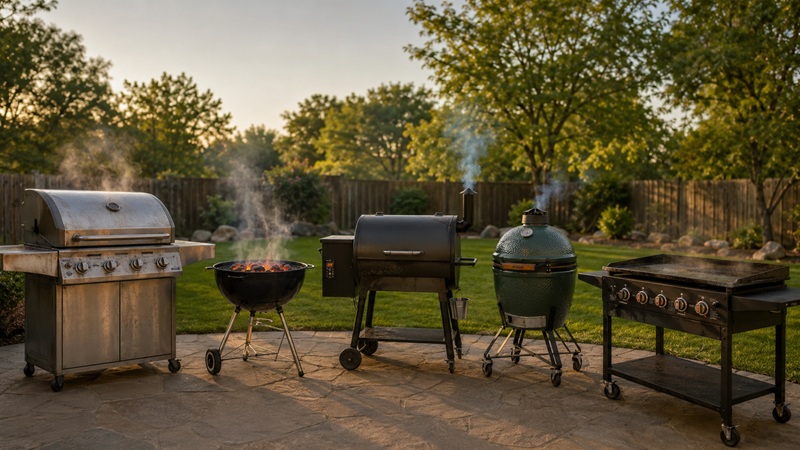
Most BBQ grills take between 10 and 45 minutes to fully heat up, depending on the type of grill and your target cooking temperature. Gas grills and Blackstones usually heat the fastest, while charcoal, pellet, and kamado grills often take longer to stabilize.
I have noticed over the years that weather, fuel quality, and airflow can also make a big difference in preheat time.
Average BBQ Grill Heat-Up Times
| Grill Type | Average Heat-Up Time |
|---|---|
| Gas Grill | 10–15 minutes |
| Charcoal Grill | 20–30 minutes |
| Pellet Grill | 15–25 minutes |
| Kamado Grill | 30–45 minutes |
| Blackstone Griddle | 10–15 minutes |
These times can change depending on outside temperature, wind, grill size, and cooking temperature. A grill heating to 225°F for smoking will usually heat faster than one trying to reach 500°F for searing steaks.
If you are still learning the basics of outdoor cooking, I also put together my full Grilling Basics guide.
How Long Does A Gas Grill Take To Heat Up?
Gas grills are usually the fastest type of BBQ grill to heat up. Most gas grills reach normal cooking temperatures in about 10 to 15 minutes with the lid closed.
If I want to grill burgers or chicken, I normally preheat my gas grill to around 400°F before putting food on the grates. For steaks, I often let it heat a few minutes longer to get the grates hotter for better sear marks.
Cold weather and wind can slow down a gas grill quite a bit. I have also noticed that dirty burners or low propane tanks can make a grill struggle to heat properly.
How Long Does A Charcoal Grill Take To Heat Up?
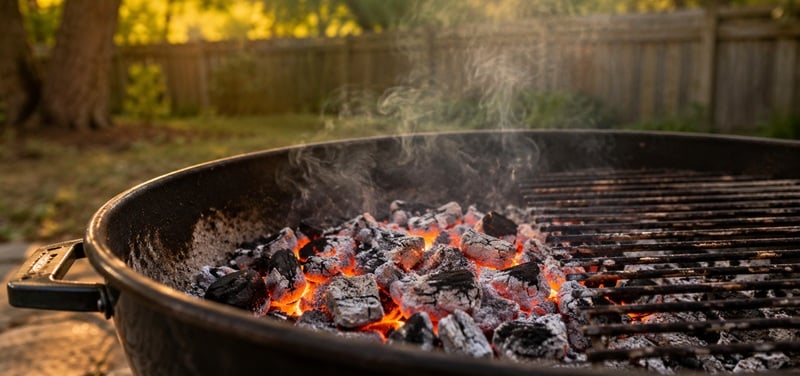
Charcoal grills usually take about 30–45 minutes from lighting the charcoal until they’re ready to cook. If the charcoal is already fully lit, the grill itself may only need another 15–20 minutes to preheat.
I normally use a chimney starter because it heats charcoal faster and more evenly than lighter fluid. If you have never used one before, here is my guide on how I use a charcoal chimney starter.
Once most of the coals are glowing red and covered with light gray ash, the grill is usually ready for cooking.
Lump charcoal often heats faster than briquettes, but briquettes usually provide steadier heat for longer cooks.
Eddie’s Tip! Don’t start cooking just because you see flames. Wait until the charcoal is glowing and lightly covered with ash.
The heat becomes much more stable at that point.
If you are building a two-zone fire for indirect cooking, it can take a little longer for the grill temperature to settle.
How Long Does A Pellet Grill Take To Heat Up?
Pellet grills normally take between 15 and 25 minutes to heat up. Some larger pellet smokers can take even longer during cold weather.
Unlike gas or charcoal grills, pellet grills go through a startup cycle first. The igniter lights the pellets while the auger slowly feeds fuel into the fire pot. During this stage, you will often see extra smoke before the grill stabilizes.
I have noticed that pellet grills heat fairly quickly to smoking temperatures like 225°F, but reaching higher grilling temperatures can take longer.
Pellet grills also behave differently than charcoal or gas grills. Here is my full pellet grill cooking guide for beginners
Eddie’s Tip! Use the right start-up procedure for your pellet grill.
How Long Does A Kamado Grill Take To Heat Up?
Kamado grills usually take the longest to heat up. Most kamado grills need about 30 to 45 minutes to fully stabilize.
The thick ceramic walls absorb and hold heat extremely well, which is great once the grill is hot. The downside is that it takes longer to build that heat in the beginning.
If you are new to ceramic cooking, I also put together a kamado grill beginners guide that explains airflow, temperature control, and common mistakes
Eddie’s Tip! I have learned not to rush a kamado grill.
If you overshoot the temperature, it can take a long time to cool back down again.
Airflow control is very important with kamado cooking. Leaving the vents open too wide during startup can make the grill heat too aggressively.
Once stabilized, though, kamado grills hold steady temperatures incredibly well for long cooks.
How Long Does A Blackstone Griddle Take To Heat Up?
A Blackstone griddle usually heats up in about 10 to 15 minutes.
Flat-top griddles heat differently than traditional grills because the entire cooking surface needs time to warm evenly. The center of the griddle often becomes hotter first.
For smash burgers, breakfast cooking, or stir fry, I usually let the griddle preheat fully before adding oil or food. This helps prevent sticking and creates more even cooking across the surface.
Eddie’s Tip! Wind can cool a griddle surface surprisingly fast, especially during colder months.
Why Is My BBQ Grill Taking So Long To Heat Up?
If your grill is heating slower than normal, there may be a problem with the fuel, airflow, or the grill itself.
Common reasons include:
- Propane regulator safety
- Wet charcoal or pellets
- Dirty burners
- Ash buildup
- Cold or windy weather
- Poor airflow
- Opening the lid too often
- Low-quality fuel
I have also seen pellet grills struggle badly when pellets absorb moisture. Damp pellets burn poorly and create weak heat.
Proper airflow makes a big difference with any type of charcoal cooking. Here is how I use vents on a charcoal grill to control heat and airflow
On charcoal grills, too much old ash can block airflow and make it hard for the fire to breathe.
If your gas grill suddenly takes much longer to heat up than normal, the regulator could be the problem. I put together a full guide on how to solve gas grill regulator problems and reset low flame issues.
How To Heat Up A Grill Faster
There are a few easy ways to speed up grill preheating.
Keep The Lid Closed
Opening the lid constantly lets heat escape and slows the process. Additionally, for cold weather, you can use a welding blanket over your lid.
Clean Out Old Ash
Ash buildup restricts airflow on charcoal and pellet grills.
Use Dry Fuel
Wet charcoal and damp pellets burn slower and create less heat.
Use A Chimney Starter
A chimney starter is one of the fastest ways to light charcoal evenly.
Open The Air Vents Properly
Charcoal and kamado grills need good airflow during startup.
Preheat Longer For High Heat Cooking
If you want strong sear marks on steaks, give the grill extra time to fully heat the cooking grates.
Do You Always Need To Preheat A Grill?
Yes, preheating a grill is almost always worth it.
A properly preheated grill:
- cooks food more evenly
- helps prevent sticking
- creates better grill marks
- burns off old residue
- stabilizes the cooking temperature
I have made the mistake of rushing this step before, especially when hungry people are standing around waiting for food.
Different cooking styles also need different grill temperatures. Here is my guide to BBQ temperature ranges and what they are used for
Eddie’s Tip! Most of the time, starting too early only leads to uneven cooking and weaker flavor.
Heating Up A Grill – My Experience
Over the years, I have noticed that every grill type has its own personality when it comes to heating up.
Gas grills are quick and convenient, while charcoal and kamado grills usually reward patience with better flavor and steadier heat.
Pellet grills fall somewhere in the middle for me. They are easy to use, but they still need time to stabilize before cooking properly.
Biggest Mistakes When Heating Up a Grill
- Opening the lid too often and letting heat escape before the grill fully heats up
- Skipping the preheat because I thought the grill “felt hot enough.
- Forgetting to clean the grates before cooking, which can create dirty smoke and uneven heating
- Using damp charcoal that struggled to light and took forever to burn clean
- Trying to rush the process instead of letting the grill stabilize first
One thing I learned the hard way is that rushing the preheat stage almost always makes the cook worse. Giving the grill enough time to fully heat up usually leads to better flavor, cleaner cooking, and fewer headaches later.
Eddie van Aken – The Grilling Dutchman
Eddie van Aken is the founder of The Grilling Dutchman, where he shares practical BBQ tips, smoking techniques, recipes, and grill reviews based on real-world experience. After years of cooking on pellet grills, charcoal grills, smokers, and kamado cookers, he focuses on helping backyard cooks get better results with less guesswork. Learn more about Eddie van Aken. Learn more about Eddie van Aken.