
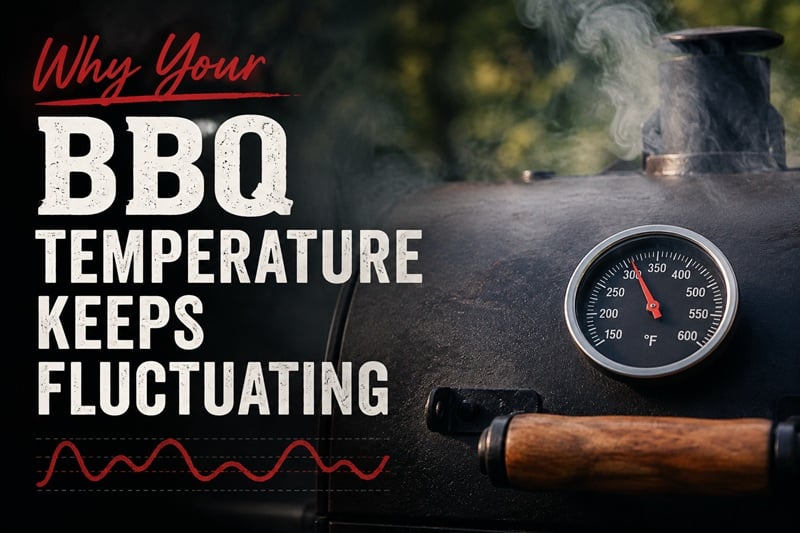
If you have spent any time cooking on a smoker or grill, you have probably watched the thermometer and wondered why the temperature keeps moving up and down.
One minute the grill is sitting at 250°F, and the next it drops to 230°F or climbs to 265°F. For many beginners, this looks like something is wrong with the grill.
Eddie’s Tip! In most cases, there is nothing wrong with your grill or smoker
BBQ temperature fluctuations are normal, part of the BBQ basics, and happen for several reasons, including airflow changes, fuel quality, environmental conditions, and the way different grills manage heat.
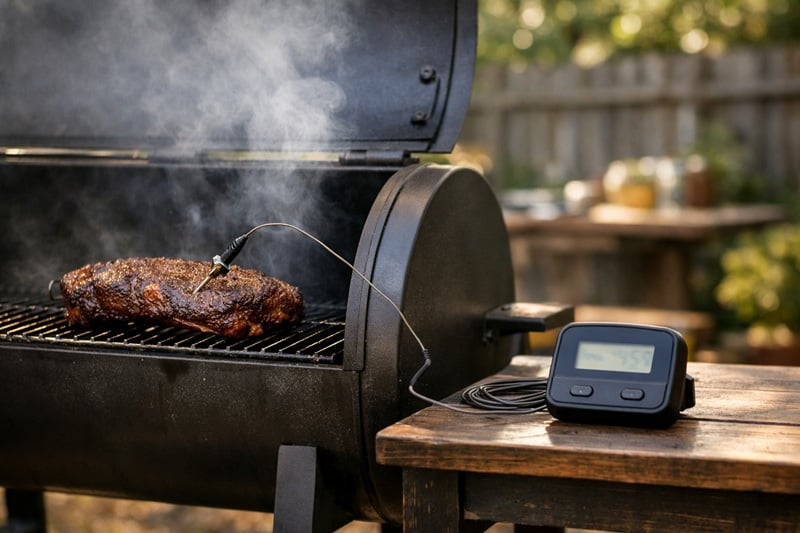
Eddie’s Tip! It is important to know the difference between normal temperature swings and problems that actually need fixing.
Why Your BBQ Temperature Keeps Fluctuating
BBQ temperatures fluctuate when the balance between heat, airflow, and fuel changes inside the grill.
Several factors can influence this balance, including:
- Fuel quality
- Airflow through the vents
- How often the lid is opened
- Weather conditions
- Grill cleanliness
Many grills also go through natural heating cycles, especially how pellet grills work to control temperature by feeding pellets automatically.
Because of these factors, it’s common for BBQ temperatures to move slightly during a cook.
Most grills naturally fluctuate within about ±15–25°F, which is perfectly normal and rarely affects the final result of the cook.
Common Causes of BBQ Temperature Fluctuations
Several things can cause temperatures to move during a barbecue cook.
The most common causes include:
- inconsistent fuel
- poor airflow
- frequent lid openings
- weather conditions
- ash buildup or dirty grills
Most of the time, fixing temperature issues simply means identifying which of these factors is affecting your cook.
Poor Fuel Quality Can Cause Temperature Swings
The fuel you use plays a major role in temperature stability.
Low-quality or damp pellets can burn inconsistently in pellet grills, causing the temperature to rise and fall as the grill feeds more fuel.
Charcoal can create similar problems if the pieces are very uneven or if the fire isn’t properly established.
Even wood chunks for a smoker that are too large or too wet can slow down combustion and affect temperature.
Eddie’s Tip! Using dry, high-quality fuel helps maintain a more stable fire and reduces temperature swings.
Airflow Problems Inside the Grill
Airflow is what allows a fire to burn consistently.
If the fire isn’t getting enough oxygen, it may burn weakly and cause temperatures to drop. If too much air suddenly reaches the fire, temperatures may spike.
Common airflow problems include:
- Vents that are partially blocked
- Grease buildup in airflow paths
- Incorrect vent settings
- Poorly arranged charcoal fires
Eddie’s Tip! Steady airflow is one of the most important parts of controlling grill temperature during long cooks.
Opening the Lid Too Often
One of the easiest ways to disrupt grill temperature is opening the lid too frequently.
Every time the lid opens, heat escapes and cooler air rushes into the grill. When the lid closes again, the fire receives a sudden burst of oxygen and can briefly burn hotter.
This cycle can cause temperatures to swing more than necessary.
Eddie’s Tip! While it is tempting to check the food often, keeping the lid closed helps the grill maintain stable cooking conditions.
I leave it closed and rely on a good digital meat thermometer to tell me when the meat is ready.
Weather Can Affect BBQ Temperatures
Outdoor cooking means the grill is always exposed to the environment.
Wind, cold temperatures, and rain can all affect how a grill holds heat.
Wind can push extra oxygen into the fire, which may cause temperature spikes. Cold weather can pull heat away from the grill and make the fire work harder to maintain temperature.
Direct sunlight can even warm certain parts of a grill and slightly affect the readings on lid thermometers.
Eddie’s Tip! Many times, I notice larger temperature swings during windy or very cold conditions.
Dirty Grills and Ash Buildup
A clean grill helps maintain steady airflow and consistent heat.
Ash buildup can block airflow in charcoal grills and smokers, which makes it harder for the fire to burn evenly.
Pellet grills can also develop ash buildup in the burn pot, which can interfere with pellet ignition and combustion.
Eddie’s Tip! Regular cleaning helps prevent these issues and keeps your grill operating more predictably.
Normal Temperature Fluctuations vs Real Problems
Before trying to fix temperature swings, it helps to understand what is actually normal.
Small fluctuations happen on almost every grill or smoker.
Normal Temperature Fluctuations.
- small swings of 10–25°F
- gradual temperature changes
- brief dips after opening the lid
These changes are part of how grills manage heat and airflow.
Problem Temperature Fluctuations.
- swings of 50–100°F or more
- sudden temperature drops
- runaway heat that keeps climbing
Eddie’s Tip! If your grill is staying within a small temperature range, the best thing to do is often leave it alone and let the cook continue.
Small Temperature Swings Are Normal
BBQ temperature fluctuations are usually caused by natural changes in airflow, fuel, and environmental conditions.
Most grills will move within a 10–25°F range, which is completely normal during a cook.
Instead of trying to eliminate every small temperature change, focus on maintaining a steady fire, using good fuel, and keeping airflow consistent.
With a stable indirect setup and a little patience, your grill will usually settle into the right cooking range on its own.
Keeping BBQ Temperatures Stable — My Experience
Over time, I have learned that the biggest mistake beginners make is chasing the thermometer.
When the temperature drops slightly, I open vents, add fuel, or start adjusting everything. Then the grill overshoots and runs too hot.
Instead, now I focus on building a steady fire first.
Once the grill settles into a cooking range, I try to leave it alone and avoid making constant adjustments. Most small temperature changes correct themselves if the fire is stable.
Eddie’s Tip! Patience is the best temperature control tool I have.
Don’t chase small temperature swings.
Many grills naturally move up and down a little during a cook. If you constantly adjust vents or fuel every time the thermometer moves, you’ll usually make the fluctuations worse.
Eddie van Aken – The Grilling Dutchman
Eddie van Aken is the founder of The Grilling Dutchman, where he shares practical BBQ tips, smoking techniques, recipes, and grill reviews based on real-world experience. After years of cooking on pellet grills, charcoal grills, smokers, and kamado cookers, he focuses on helping backyard cooks get better results with less guesswork. Learn more about Eddie van Aken. Learn more about Eddie van Aken.