
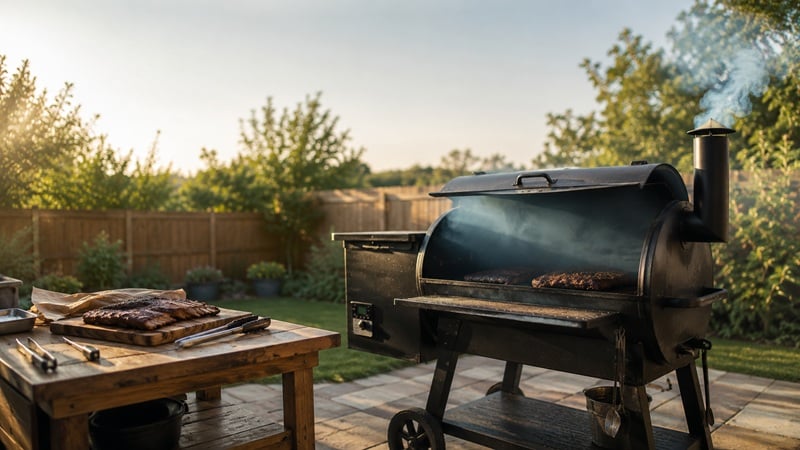
Pellet smokers changed backyard BBQ forever. They made smoking meat easier for beginners compared to traditional smokers, while still giving food that real wood-fired flavor, but how do pellet smokers work?
Key Takeaway:
A pellet smoker works by automatically feeding wood pellets from a hopper into a fire pot using an auger. An electric igniter starts the fire while a fan circulates heat and smoke through the cooking chamber. A digital controller keeps the cooking temperature steady automatically during the cook.
The first time I used a pellet smoker, I honestly thought it felt almost too easy compared to charcoal and offset smokers. I set the temperature, heard the pellets feeding into the fire pot, and watched thin blue smoke roll out of the chimney while the smoker basically handled the hard work for me.
But if you’re new to them, the inside of a pellet smoker can look confusing at first. Terms like auger, hopper, fire pot, and digital controller sound more complicated than they really are.
Eddie’s Tip! Pellet smokers are actually very simple once you understand the basics.
What Is A Pellet Smoker?
A pellet smoker is an outdoor cooker that burns compressed wood pellets for both heat and smoke flavor.
Pellet smokers use electricity to control the cooking process automatically. A digital controller manages the temperature while the smoker feeds wood pellets into the fire as needed.
That’s why many people call pellet grills “set it and forget it” smokers.
Brands like Traeger and Pit Boss helped make pellet smokers popular, but today, there are many pellet grill brands available with different sizes and features.
Most pellet smokers can:
- smoke low and slow
- roast
- bake
- cook at steady temperatures for hours
Eddie’s Tip! Not all brands and models are good at grilling.
How Does A Pellet Smoker Work?
Once you understand the main parts, the whole system makes a lot more sense.
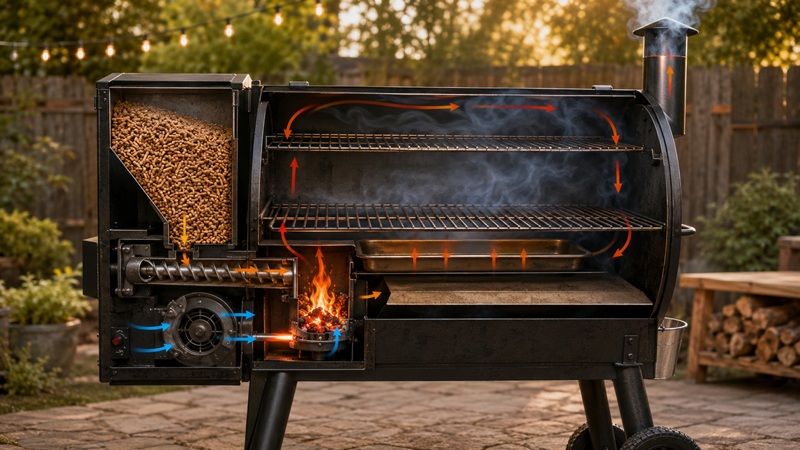
The Main Parts Of A Pellet Smoker
Most pellet smokers use the same basic system, just as in the image above.
Pellet Hopper
The hopper is the storage bin that holds the wood pellets.
You pour food-grade hardwood pellets into the hopper before cooking. Depending on the size of the smoker, a full hopper can last several hours before needing a refill.
Eddie’s Tip! Larger pellet smokers usually have bigger hoppers for long overnight cooks.
Auger
The auger is basically a long metal screw inside a tube.
Its job is to move pellets from the hopper to the fire pot slowly over time.
When the smoker needs more heat, the auger turns and feeds more pellets into the fire.
When less heat is needed, it slows down.
Eddie’s Tip! This automatic pellet feeding system is one of the biggest reasons pellet smokers are so easy to use.
Fire Pot
The fire pot is where the pellets burn.
Once pellets drop into the fire pot, an electric igniter rod heats up and starts the fire.
After ignition, the pellets continue burning while new pellets feed into the fire pot automatically throughout the cook.
This is the heart of the smoker.
Fan System
Inside the smoker is a fan that circulates heat and smoke around the cooking chamber.
This airflow helps pellet smokers cook more evenly than many charcoal grills.
The moving air also helps maintain stable cooking temperatures.
Digital Controller
The controller is the electronic brain of the pellet smoker.
You simply set your cooking temperature, and the controller manages:
- pellet feeding
- airflow
- heat levels
Better pellet grills use advanced controllers that keep temperatures very steady during long cooks.
For all these parts to do their job, it is important to have a regular maintenance schedule for your pellet grill.
I still recommend using a good BBQ thermometer to monitor your meat temperatures during long cooks
What Happens When You Turn On A Pellet Smoker – Step-By-Step
Here’s what actually happens during startup.
Step 1: You Fill The Hopper With Pellets
The smoker needs dry hardwood pellets to operate.
Popular pellet woods include:
- hickory
- oak
- apple
- cherry
- mesquite
Eddie’s Tip! Different woods create different smoke flavors.
Step 2: The Igniter Starts Heating Up
After turning on the smoker, the hot rod igniter inside the fire pot begins heating.
Step 3: The Auger Starts Feeding Pellets
The auger slowly pushes pellets into the fire pot.
Step 4: The Pellets Ignite
The pellets catch fire inside the fire pot.
Eddie’s Tip! At this stage, you will usually see some heavy white startup smoke for a few minutes.
Step 5: The Fan Circulates Heat And Smoke
The fan spreads heat and smoke around the cooking chamber.
This creates convection-style cooking inside the smoker.
Step 6: The Controller Maintains Temperature
The smoker continuously adjusts pellet feeding and airflow to maintain your selected cooking temperature.
The temperature is measured by the built-in thermometer in the cooking chamber.
That automatic control is what makes pellet smokers so beginner-friendly. If you’re completely new to smoking meat, my Pellet Grill Cooking Guide explains the basics of low-and-slow BBQ cooking.
Do Pellet Smokers Need Electricity?
Yes, pellet grills need electricity.
Even though pellet smokers burn wood pellets for heat and smoke flavor, they still require electricity to operate.
Electric power is used for:
- the auger
- the fan
- the igniter
- the digital controller
Without electricity, the pellets would not feed properly, and the smoker could not control temperatures.
That’s why pellet smokers are often called electric pellet smokers or wood pellet grills.
Eddie’s Tip! The electricity runs the system, but the wood pellets create the actual cooking heat and smoke flavor.
How Do Pellet Smokers Create Smoke Flavor?
Pellet smokers create smoke flavor by burning hardwood pellets inside the fire pot.
As the pellets burn, they produce heat and clean wood smoke that circulates around the food.
Eddie’s Tip! Pellet smokers usually produce a milder smoke flavor compared to offset smokers.
Pellet smokers burn more efficiently and cleanly than traditional wood smokers. Cleaner burning fires create lighter smoke flavor.
Learning how temperature affects smoke flavor is one of the biggest beginner lessons in BBQ.
I’ve found that lower cooking temperatures usually produce more smoke flavor in pellet smokers. Once you start cooking at higher temperatures, the fire burns cleaner and creates less visible smoke.
That’s why many people smoke meat at:
- 180°F to 225°F early in the cook
- Then, increase temperatures later
What Wood Pellets Do Pellet Smokers Use?
Pellet smokers use food-grade hardwood pellets made specifically for cooking.
Never use heating pellets meant for home furnaces. They contain chemicals!
Eddie’s Tip! Cooking pellets are made from compressed hardwood sawdust without harmful chemicals.
Different wood types create different flavors.
Common Pellet Wood Flavors
| Wood Pellet | Flavor |
|---|---|
| Hickory | Strong classic BBQ flavor |
| Oak | Balanced all-purpose smoke |
| Apple | Mild and slightly sweet |
| Cherry | Sweet with nice color on meat |
| Mesquite | Strong and bold smoke flavor |
I usually recommend oak or hickory for beginners because they work well with almost everything.
What Makes Pellet Smokers Different From Other Smokers?
Pellet smokers sit somewhere between traditional smokers and modern outdoor ovens.
Here’s the simplest way I explain it to beginners.
| Smoker Type | Difficulty | Smoke Flavor | Temperature Control |
|---|---|---|---|
| Pellet Smoker | Easy | Medium | Automatic |
| Charcoal Smoker | Medium | Strong | Manual |
| Offset Smoker | Hard | Very Strong | Fully Manual |
| Gas Grill | Easy | Very Light | Automatic |
Eddie’s Tip! Pellet smokers trade a little smoke intensity for convenience and consistency.
For many backyard cooks, that’s a very good trade.
Are Pellet Smokers Good For Beginners?
Absolutely.
In my opinion, pellet smokers are one of the easiest ways for beginners to learn outdoor cooking and smoking.
You don’t need to constantly:
- Adjust vents
- Manage airflow
- Add charcoal
- Split wood logs
- Dight temperature swings
You simply:
- Fill the hopper
- Set the temperature
- Let the smoker work
That simplicity helps beginners focus more on cooking the food itself.
Common Pellet Smoker Problems
Pellet smokers are easier to use than many smokers, but they still have some common issues.
Wet Pellets
Pellets absorb moisture very easily.
Wet pellets can:
- Swell
- Jam the auger
- Stop ignition
- Create poor smoke
I always store pellets in sealed containers.
Auger Jams
Sometimes pellets break apart or swell inside the auger tube.
This can block pellet feeding.
Temperature Swings
Wind, cold weather, grease buildup, or poor pellets can cause unstable temperatures.
Weak Smoke Flavor
Some people expect pellet smokers to taste exactly like offset smokers.
That usually won’t happen.
Pellet smokers create a cleaner and milder smoke profile.
Eddie’s Tip! One mistake I see beginners make is constantly opening the lid to “check” the food.
Pellet smokers work best when they maintain stable airflow and temperature. Every time you open the lid, you lose heat and extend the cook.
Trust the thermometer more than your eyes.
If you want to learn more beginner BBQ techniques, smokers, and outdoor cooking basics, check out my Smoking Basics guide.
Pellet Smokers– My Experience
Pellet smokers are one of the easiest ways to get started with real BBQ cooking. However, there are also pellet grills.
If you are not sure if you need a pellet grill or pellet smoker, you can read my article that explains the difference between a pellet smoker and a pellet grill.
I still enjoy cooking on charcoal grills and offset smokers because I like the hands-on fire management part of BBQ.
But there are plenty of days when I simply want reliable temperatures and easy cooking without babysitting a fire all afternoon.
That’s where pellet smokers really shine.
They make smoking meat approachable for beginners while still giving food real wood-fired flavor.
And honestly, that convenience is why pellet smokers became so popular in the first place.
Eddie van Aken – The Grilling Dutchman
Eddie van Aken is the founder of The Grilling Dutchman, where he shares practical BBQ tips, smoking techniques, recipes, and grill reviews based on real-world experience. After years of cooking on pellet grills, charcoal grills, smokers, and kamado cookers, he focuses on helping backyard cooks get better results with less guesswork. Learn more about Eddie van Aken. Learn more about Eddie van Aken.