
If you spend time around barbecue forums or watch experienced pitmasters cook, you’ll hear people talk about wrapping meat during a cook.
Sometimes it’s called the Texas Crutch. Other times it’s simply called wrapping.
Whatever you call it, the idea is the same: wrapping meat through a long BBQ cook can help manage moisture, speed up cooking, and push the meat through the stall.
When to wrap smoked meat during a BBQ cook is an important step. Wrapping too early or too late can affect bark, smoke flavor, and overall texture.
Eddie’s Tip! Understanding when to wrap meat during a BBQ cook helps you control the results instead of guessing.
If you’re learning low-and-slow cooking, my guide to smoking meat basics explains the key techniques every backyard pitmaster should understand.
The Best Time to Wrap Meat During a BBQ Cook
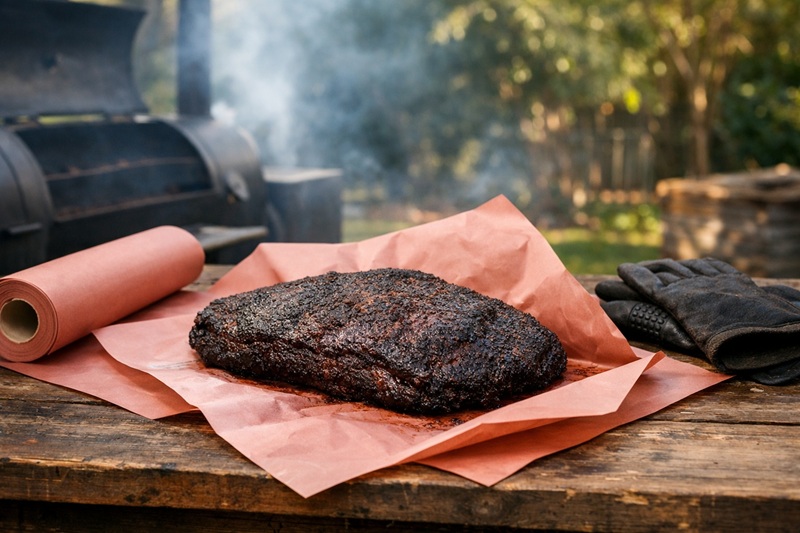
Most pitmasters wrap smoked meat when the bark is dark and set, usually when the internal temperature reaches around 160–170°F. This often happens during the BBQ stall, when the meat’s internal temperature stops rising for a period of time.
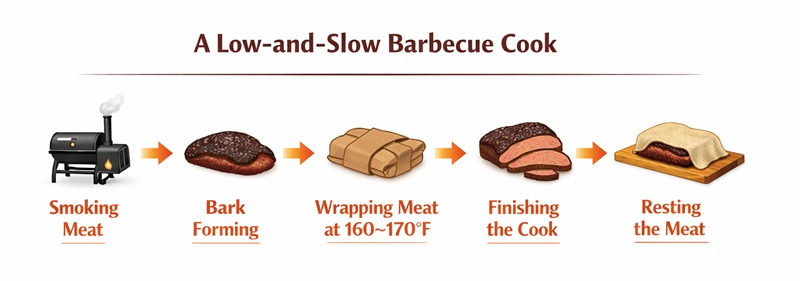
Wrapping at this stage reduces evaporating and cooling, which allows the internal temperature to start climbing again. The wrap also traps moisture and protects the meat during the later stages of the cook.
The exact timing can vary slightly depending on the cut of meat, the smoker temperature, and the bark formation.
Eddie’s Tip! For most low-and-slow barbecue cooks, the 160–170°F range is a reliable starting point to start wrapping.
Why Pitmasters Wrap Meat During a Cook
Wrapping smoked meat during a cook serves several practical purposes.
One of the biggest reasons is to push through the BBQ stall. During the stall, moisture evaporating from the surface cools the meat and slows the temperature rise. Wrapping reduces evaporation and allows the internal temperature to start climbing again.
Wrapping also helps retain moisture inside the meat. Long smoking sessions can dry out the outer layers, and wrapping protects the meat as it continues cooking.
Another benefit is cooking consistency. Once wrapped, the meat cooks in a more stable environment, which can help prevent the surface from getting too dark or dry.
Eddie’s Tip! I use wrapping as a way to control the later stages of the cook rather than simply waiting for the meat to finish on its own.
What Is the Texas Crutch?
The Texas Crutch is the traditional barbecue technique of wrapping meat during a cook to speed things up and preserve moisture.
Competition pitmasters often use this method because it allows them to produce consistent results under tight timelines.
The technique became popular in barbecue competitions where cooks needed to finish large cuts like brisket and pork shoulder within a predictable timeframe.
Eddie’s Tip! By wrapping the meat, you can push through the stall faster while still maintaining tenderness and moisture.
Today, many backyard pitmasters use the Texas Crutch during long cooks, especially when smoking brisket or pork butt.
When to Wrap Different BBQ Meats
Different cuts of meat behave slightly differently during a cook, but the general wrapping timing is very similar across large barbecue cuts.
When to Wrap Brisket
Brisket is usually wrapped once the bark has developed and the internal temperature reaches 160–170°F (71-76°C).
At this stage, the bark should look dark and firm. Wrapping too early can soften the bark and reduce smoke flavor.
Many pitmasters wrap brisket to help push through the stall and prevent the flat from drying out during the final stage of the cook.
When to Wrap Pork Butt
Pork butt is often wrapped in the same temperature range as brisket, usually around 160–170°F (71-76°C).
Some cooks choose not to wrap pork butt at all, especially if they want a thicker bark. But wrapping can shorten the stall and help maintain moisture during long cooks.
If you want a deeper look at timing and technique, see my tips on when to wrap pork butt.
When to Wrap Ribs
Ribs are sometimes wrapped as part of the 3-2-1 method used for smoking ribs.
In that method, ribs are smoked uncovered for 3 hours, then are wrapped for 2 hours of the cook before finishing unwrapped again for another hour.
Eddie’s Tip! Wrapping ribs helps tenderize the meat and speeds up cooking, however, sometimes I skip wrapping to keep a firmer bark.
Signs Your BBQ Meat Is Ready to Be Wrapped
Temperature is a helpful guide, but visual cues often tell you more about when meat should be wrapped.
One of the most important signs is bark development. The outside of the meat should look dark, dry, and slightly firm.
If the surface still looks wet or soft, wrapping too early can prevent the bark from forming properly.
You may also notice that the meat has entered the stall and the internal temperature has stopped rising.
At that point, wrapping can help the cook move forward.
Watching both the temperature and the bark will give you the best indication of when to wrap.
Foil vs Butcher Paper for Wrapping BBQ
Two materials are most used for wrapping barbecue meat: aluminum foil and butcher paper. Both are used to push the meat through the stall.
Don’t know what the stall is? I wrote a post called the BBQ stall explained for that purpose.
Aluminum Foil
Foil creates a tight seal around the meat and traps moisture inside. This speeds up cooking and pushes through the stall quickly. The downside is that foil can soften the bark because it traps steam. Read more about my preferred aluminum foil here.
Butcher Paper
Butcher paper is more breathable than foil. It still reduces evaporation but allows some airflow, which helps preserve bark texture.
Many pitmasters prefer butcher paper when cooking brisket because it balances moisture retention with bark development.
Eddie’s Tip! Both materials work well. The best choice depends on the results you want.
How Wrapping Changes Bark, Smoke, and Cooking Time
Wrapping changes several aspects of a barbecue cook.
Once meat is wrapped, the surface is no longer exposed directly to smoke. This means smoke flavor development slows down, or stops, after wrapping.
Wrapping also softens the bark slightly, especially when foil is used. Butcher paper tends to preserve bark a little better than foil.
One noticeable change is cooking speed. Wrapped meat usually finishes faster because evaporation no longer cools the surface.
For large cuts like brisket and pork shoulder, wrapping can reduce the total cooking time by one to several hours.
When to Unwrap Meat During a BBQ Cook
Wrapping meat helps push through the stall and retain moisture, but some pitmasters choose to unwrap the meat again near the end of the cook.
Unwrapping allows the surface of the meat to dry slightly, which can help firm up the bark if it softened during the wrapped stage.
This is especially useful when cooking with foil, since foil traps a lot of moisture and steam.
Some cooks unwrap brisket or pork shoulder during the last part of the cook if the bark looks too soft. Once the meat is back on the smoker, the dry heat can help tighten the bark again.
Eddie’s Tip! In many cases, though, I keep the meat simply wrapped until it finishes cooking and then rests before slicing or pulling.
The decision to unwrap usually depends on two things:
- How the bark looks
- How much moisture the meat has released
If the bark already looks good and the meat feels tender, leaving it wrapped until the end works perfectly fine.
Even if the meat is still wrapped at the end of the cook, tenderness is what really determines when it’s finished. I explain this further in my guide on BBQ meat internal temperatures.
Should You Always Wrap BBQ Meat?
Wrapping is helpful, but it is not required for great barbecue.
Some pitmasters prefer cooking meat unwrapped the entire time. This produces a thicker bark and stronger smoke flavor.
Cooking unwrapped often takes longer and requires careful fire management to prevent the meat from drying out.
Eddie’s Tip! Both methods can produce excellent barbecue. Wrapping simply gives you more control over moisture and cooking time.
How I Wrap Meat During a BBQ Cook – My Experience
When I smoke brisket or pork butt, I usually let the meat cook unwrapped until the bark looks dark and firm.
Once the internal temperature gets close to 165°F (73°C), I start checking the surface. If the bark has developed well and the meat has entered the stall, that is usually when I wrap.
For brisket, I tend to prefer butcher paper because it helps protect the meat while still keeping the bark from getting too soft.
If I am cooking pork shoulder and want to move the cook along faster, foil works great.
Eddie’s Tip! For me, wrapping is less about hitting an exact number and more about how the meat looks and feels during the cook.
Don’t rush the wrap.
If you wrap too early, the bark won’t have time to form, and the outside of the meat can turn soft. I usually wait until the bark looks dark and set before wrapping anything.
The thermometer helps, but the way the meat looks will give you the final answer.
Wrapping Helps Control the Cook
Wrapping meat during a barbecue cook is a useful technique that helps manage moisture, push through the stall, and control cooking time.
Most pitmasters wrap large cuts like brisket and pork butt when the internal temperature reaches around 160–170°F (71-76°C), and the bark has fully formed.
Using aluminum foil or butcher paper allows you to guide the cook toward the results you want while still producing tender, flavorful barbecue.
Eddie van Aken – The Grilling Dutchman
Eddie van Aken is the founder of The Grilling Dutchman, where he shares practical BBQ tips, smoking techniques, recipes, and grill reviews based on real-world experience. After years of cooking on pellet grills, charcoal grills, smokers, and kamado cookers, he focuses on helping backyard cooks get better results with less guesswork. Learn more about Eddie van Aken. Learn more about Eddie van Aken.