
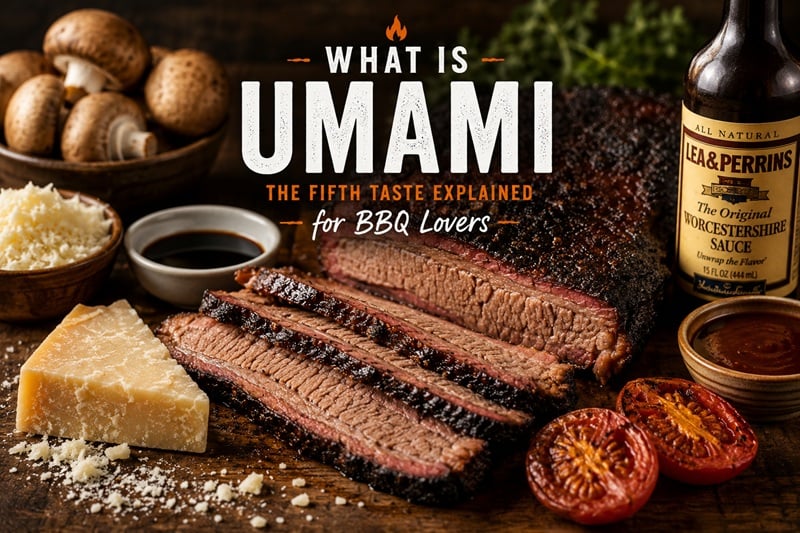
If you have ever taken a bite of smoked brisket, a juicy burger, or a perfectly grilled steak and wondered why it tasted so rich and satisfying, you’ve already experienced umami.
Eddie’s Tip! Umami is often called the fifth basic taste, joining sweet, salty, sour, and bitter.
While the word may sound complicated, the idea is actually pretty simple. It’s the savory, meaty flavor that makes many of our favorite BBQ foods taste even better.
As someone who spends plenty of weekends behind the smoker, I use umami-rich ingredients all the time without really thinking about it. Worcestershire sauce, soy sauce, mushrooms, Parmesan cheese, and slow-smoked beef all bring that extra layer of flavor that keeps people coming back for another bite.
Let’s take a closer look at what umami is and how you can use it to improve your own BBQ.
What Is Umami Flavor Made Of?
Umami comes from naturally occurring compounds called glutamates. These compounds are found in many everyday foods, especially foods that have been aged, fermented, roasted, or cooked for a long time.
You don’t need to remember the science behind it. The important thing is knowing that glutamates create a deep, savory flavor that makes food taste richer.
Many of the foods we already use for grilling and smoking are naturally high in umami. Beef, pork, chicken, tomatoes, mushrooms, Parmesan cheese, soy sauce, and Worcestershire sauce are all great examples.
That’s one reason smoked meat tastes so satisfying. As the meat slowly cooks, its natural flavors become more concentrated, creating an even richer bite.
What Does Umami Taste Like?
People often describe umami as savory, meaty, rich, or full-bodied.
It’s different from salt. While salt makes food taste brighter, umami adds depth.
Eddie’s Tip! Think of it as the flavor that makes you want one more bite.
If you’ve ever enjoyed a perfectly smoked brisket, a bowl of homemade chili, or a burger loaded with mushrooms and melted cheese, you’ve tasted plenty of umami.
It’s not a flavor that jumps out on its own. Instead, it works together with the other flavors to make the whole dish taste better.
Common Umami Examples
One of the best things about umami is that you don’t have to go looking for unusual ingredients. Many of the foods we already use for grilling and smoking are naturally packed with savory flavor.
Meat
Beef is one of the best examples of umami, which is one reason steaks, burgers, and smoked brisket taste so satisfying. Pork also develops a rich, savory flavor, especially in bacon and slow-smoked pork shoulder.
Vegetables
Mushrooms are famous for their umami flavor and pair perfectly with grilled steaks and burgers. Tomatoes are another great example, especially when they’re roasted, grilled, or cooked into a BBQ sauce.
Cheese
Aged cheeses like Parmesan and sharp cheddar are naturally rich in umami. A little freshly grated Parmesan or a slice of aged cheddar can add even more depth to grilled vegetables, burgers, and other BBQ favorites.
Sauces and Seasonings
These ingredients are commonly used in marinades, burger mixes, BBQ sauces, and homemade rubs because they add a rich, savory flavor without overpowering the meat.
Eddie’s Tip! Some of my favorite ways to add umami are with Worcestershire sauce, soy sauce, and miso paste.
What Is Umami Used For?
Umami is used to make food taste richer and more satisfying.
That’s why you’ll find umami-rich ingredients in everything from BBQ rubs and marinades to homemade sauces and chili recipes. If you like making your own seasoning blends, my guide to creating a BBQ rub is a great place to start.
I often use Worcestershire sauce when making burgers or mixing a beef marinade. It doesn’t overpower the meat, but it adds a little extra depth that people notice even if they can’t explain why it tastes so good.
Soy sauce works the same way in many marinades, especially for beef and chicken. If you’re new to using them, check out my guide on what a marinade is and how it helps add flavor before cooking.
Even adding mushrooms to a steak dinner or sprinkling freshly grated Parmesan over grilled vegetables can give your meal a noticeable flavor boost.
If your BBQ tastes a little flat, don’t reach for the salt first. Try adding a splash of Worcestershire sauce or soy sauce instead.
Eddie’s Tip! A little extra umami flavor often brings the whole dish together.
Is Umami the Same Thing as MSG?
Not exactly.
MSG stands for monosodium glutamate. It’s simply a seasoning that contains glutamate, the same natural compound found in many foods.
That means foods like Parmesan cheese, tomatoes, mushrooms, beef, and soy sauce all naturally contain glutamates too.
Because of this, many people enjoy umami every day without realizing it.
Whether the glutamate comes from naturally occurring ingredients or from MSG, the goal is the same: creating a richer, more savory flavor.
Frequently Asked Questions
What is an example of umami?
Some of the best examples are smoked brisket, steak, mushrooms, Parmesan cheese, soy sauce, Worcestershire sauce, tomatoes, and bone broth. They all have the rich, savory flavor that umami is known for.
What foods are full of umami?
Beef, pork, chicken, mushrooms, tomatoes, Parmesan cheese, aged cheeses, soy sauce, miso paste, anchovies, and Worcestershire sauce are all naturally high in umami.
Is Worcestershire sauce considered umami?
Yes. Worcestershire sauce contains fermented ingredients and anchovies, making it one of the easiest ways to add more savory flavor to burgers, steaks, marinades, and BBQ sauces.
Why do grilled and smoked meats have so much umami?
As meat cooks slowly, moisture evaporates and the natural flavors become more concentrated. Browning on the outside also creates hundreds of new flavor compounds, giving grilled and smoked meat its rich, satisfying taste.
Umami Flavors – My Experience
When I first started grilling, I had never even heard the word “umami.” I just knew that some foods tasted richer than others.
The more I cooked, the more I noticed the same ingredients showing up again and again. Worcestershire sauce, mushrooms, Parmesan cheese, soy sauce, and slow-smoked beef all have one thing in common. They are packed with savory flavor.
I don’t spend much time thinking about the science when I’m cooking. I simply know that using a few umami-rich ingredients can make a good burger, steak, brisket, or my homemade BBQ sauce for pulled pork taste even better. Once you know what umami is, you’ll start noticing it in many of your favorite BBQ recipes.
Eddie van Aken – The Grilling Dutchman
Eddie van Aken is the founder of The Grilling Dutchman, where he shares practical BBQ tips, smoking techniques, recipes, and grill reviews based on real-world experience. After years of cooking on pellet grills, charcoal grills, smokers, and kamado cookers, he focuses on helping backyard cooks get better results with less guesswork. Learn more about Eddie van Aken. Learn more about Eddie van Aken.