
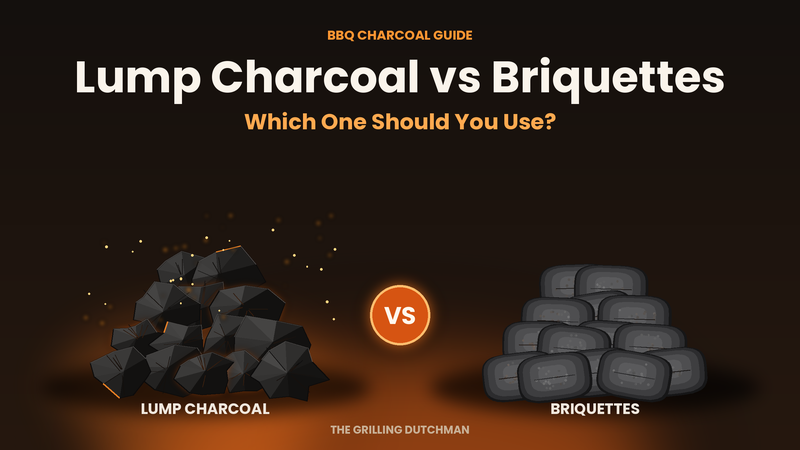
Walk down the charcoal aisle, and you face the same question I have: a bag of lump charcoal or a bag of briquettes?
I will give you the short answer first, because that’s how I like it: direct. Neither one is “the best.” They behave differently, and the right choice depends on what you’re cooking, what grill you’re using, and how much you want to spend.
In this guide, I will explain what each one is, how they differ on the grill, and when I use one over the other.
Quick Answer: Which Should You Choose?
- Choose lump charcoal if you want high heat, fast lighting, less ash, and a clean, natural burn. Great for steaks, burgers, and kamado cooking.
- Choose briquettes if you want steady, predictable heat that lasts longer and costs less. Great for low and slow cooks, beginners, and big cookouts.
- Not sure? Start with briquettes for consistency, then try lump once you’re comfortable controlling your fire. You can also mix them (more on that below).
What Is Lump Charcoal?
Lump charcoal is simply wood that has been burned in a low-oxygen environment until the moisture and most of the other compounds are gone. What’s left is almost pure carbon, still in the shape of the original pieces of wood.
That’s why a bag of lump looks like a bag of blackened branches and chunks. Sizes are all over the place, from big pieces to small bits and dust at the bottom of the bag.
What I like about lump:
- It lights quickly and gets hot fast.
- It burns hotter than briquettes, which is great for searing.
- It produces much less ash.
- It’s usually just wood, with no binders or fillers.
- It responds quickly when you open or close the vents.
What I don’t like about lump:
- Pieces vary in size, so the burn can be uneven.
- It burns faster, so you may need to add more during a long cook.
- Bags vary a lot in quality. Some are full of big chunks; others are mostly small pieces and dust.
- It can pop and throw a few sparks.
- It usually costs more.
What Are Charcoal Briquettes?
Briquettes are manufactured. They’re made from charcoal dust and wood scraps pressed together with a binder (often a starch) and sometimes other additives, then formed into those uniform pillow shapes.
Because they’re all the same size and shape, they burn in a predictable way. That consistency is their biggest selling point.
What I like about briquettes:
- They burn steadily and evenly, which makes temperature control easier.
- They last longer than lump.
- They’re uniform, so stacking and arranging them for methods like the snake is simple.
- They’re usually cheaper and easy to find.
- Every bag performs about the same.
What I don’t like about briquettes:
- They make more ash, which can choke airflow during long cooks if you don’t manage it.
- They don’t get quite as hot as lump.
- They take a bit longer to light and ash over.
- Cheaper brands can contain fillers and additives, so read the label.
- Avoid the instant-light kind that’s pre-soaked with lighter fluid. It can leave an off taste on your food, and you don’t need it. Use a chimney starter instead.
Lump vs Briquettes: Side-by-Side
| Lump Charcoal | Briquettes | |
|---|---|---|
| Made from | Pure wood, burned down to carbon | Charcoal dust, wood scraps, binders |
| Heat | Hotter | Moderate |
| Burn time | Shorter | Longer |
| Consistency | Varies by bag | Very consistent |
| Ash | Low | Higher |
| Lighting | Fast | A bit slower |
| Price | Usually higher | Usually lower |
| Best for | Searing, kamados, hot and fast cooks | Low and slow, beginners, big cookouts |
Does Charcoal Type Change the Flavor?
This is where people argue the most, so let me keep it honest, and give you my personal experience.
A clean-burning fire of either type will not ruin your food. Most of the flavor on your plate comes from the meat, your rub, and especially the wood smoke you add.
What really hurts flavor is a dirty fire: lighter fluid, soaked-in additives, or smoldering coals that never fully catch.
Lump, being pure wood, can add a slightly more natural, wood-fired character, and some cooks swear they can taste it. Good-quality briquettes burn clean once they’re fully lit and ashed over. [EDDIE: add your own honest take. Have you noticed a real difference side by side?]
If you want a stronger smoke flavor, that’s a job for wood chunks, not the charcoal. I cover this in my guide on how to smoke meat on a charcoal grill.
Which Is Better for Different Types of Cooking?
Searing steaks and burgers
Lump wins here. It burns hotter and responds quickly, so you can build a proper searing zone. [EDDIE: add what you like to cook this way.]
Low and slow smoking
Briquettes are my usual recommendation for beginners. Their steady, predictable burn makes it much easier to hold a stable temperature for hours. If you want to try it, take a look at my guides on the snake and minion methods and how to keep a charcoal grill at 225.
Lump can work for long cooks too, especially in a well-built kamado, but the uneven sizes make the burn harder to predict.
Kamado grills
Most kamado owners prefer lump. It produces little ash, which keeps the airflow clear in a sealed ceramic cooker, and it lights easily. Many kamado manufacturers recommend it too, so check your owner’s manual. If you’re shopping for one, see my kamado grill reviews.
Kettle grills and barrel grills
Either one works well. Briquettes are the easy choice for consistency, while lump gives you extra heat when you want it.
Big cookouts and parties
Briquettes. They’re cheaper, they last longer, and you won’t have to keep refueling halfway through the party.
The Hybrid Approach: Mixing Lump and Briquettes
You don’t have to pick a side. Plenty of grillers mix the two to get the best of both: briquettes for a steady, long-lasting base, and lump on top for extra heat and quick lighting.
It’s a great way to experiment. Start with mostly briquettes and add a handful of lump for searing or when you need a quick temperature boost. [EDDIE: do you ever mix them? Add your own setup.]
Tips for Getting the Most From Either One
- Use a chimney starter. It’s the cleanest, easiest way to light either type with no lighter fluid. Here’s how to use a charcoal chimney starter.
- Wait for the coals to ash over. Don’t put food on until the fire is burning clean.
- Keep your charcoal dry. Damp charcoal is hard to light and burns poorly. See how I store charcoal.
- Buy by weight, not by bag size. Lump is lighter and less dense, so a bag of lump holds fewer pounds than you’d expect.
- Don’t skip the ash. Empty the ash before each cook, especially with briquettes, so air can flow properly. Learn more about using the vents on a charcoal grill.
- Check the bag. Look for lump with larger pieces and briquettes with short ingredient lists.
- Reuse leftovers. Unburned charcoal can often be used again. Here’s what to know about reusing charcoal.
My Pick
I use both lump and briquettes depending on what I cook. As I mentioned above, I use lump for hot and briquettes for low and slow. For indirect cooking, I usually go for the briquettes since that cook is in most cases a little longer.
If you’re just getting started, my advice is simple: grab a bag of good briquettes, learn how your grill breathes, and cook a few times. Once that feels natural, buy a bag of lump and compare them side by side. That’s the best way to find what works for you.
If you’re still shopping for a grill, my charcoal grill reviews can help you choose one.
Frequently Asked Questions
Is lump charcoal better than briquettes?
Not necessarily. Lump burns hotter and cleaner with less ash, while briquettes burn longer and more evenly. “Better” depends on what you’re cooking.
Which burns longer, lump or briquettes?
Briquettes generally burn longer and more steadily. Lump burns faster, so long cooks may need more fuel added.
Can I mix lump charcoal and briquettes?
Yes. Many grillers do, using briquettes for a steady base and lump for extra heat and easy lighting.
Which is better for smoking?
Briquettes are usually easier for beginners because of their consistent burn. Lump works well too, especially in kamados, with a bit more practice.
Is lump charcoal healthier than briquettes?
Good-quality briquettes and lump both burn clean when fully lit. The bigger concern is avoiding lighter fluid and fillers, so choose a quality product and use a chimney starter.
Do I need lump charcoal for a kamado?
Most kamado owners prefer it because of the low ash, but check your manufacturer’s recommendation.
Final Thoughts
Lump charcoal and briquettes both make great food. Lump gives you heat and a natural burn. Briquettes give you consistency and value. The best fuel is the one that fits your grill and your cook, and the best way to find out is to try both.
Happy grilling!
Eddie van Aken
Eddie van Aken is the founder of The Grilling Dutchman, where he shares practical BBQ tips, smoking techniques, recipes, and grill reviews based on real-world experience. After years of cooking on pellet grills, charcoal grills, smokers, and kamado cookers, he focuses on helping backyard cooks get better results with less guesswork. Learn more about Eddie van Aken. Learn more about Eddie van Aken.