
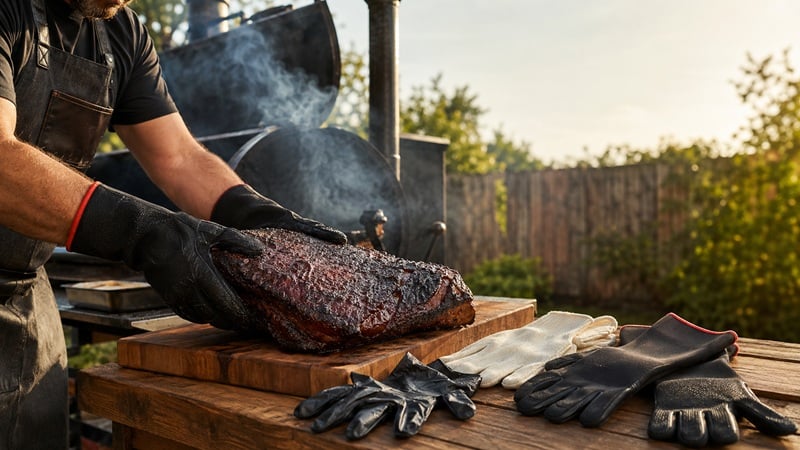
I’ve used several types of BBQ gloves over the years, and not all of them are equally useful around the smoker. Some are great for moving a hot brisket, while others work better for pulling pork or slicing meat on the cutting board.
In this guide, I’ll cover the best gloves for handling hot meat, including my top picks for shredding, slicing, and everyday BBQ cooking.
Key Takeaway:
The best gloves for handling hot meat are heat-resistant, food-safe, and easy to grip when lifting large cuts of barbecue. For most BBQ cooks, neoprene gloves or cotton glove liners paired with nitrile gloves offer the best balance of heat protection, comfort, and dexterity.
My Top Picks for Handling Hot Meat
I’ve used several types of BBQ gloves over the years. Here’s a side-by-side comparison of the gloves I recommend most often for handling hot meat.
| Product | Best For | Material | Waterproof | Heat Protection |
|---|---|---|---|---|
| Cotton Liners + Black Nitrile Gloves | Best Overall | Cotton Liners & Nitrile Gloves | Yes | Very Good |
| Oil-Resistant Neoprene BBQ Gloves | Best for Slicing & Cutting Hot Meat | Neoprene | Yes | Excellent |
| Insulated Heat-Resistant Meat Gloves | Best for Shredding Pulled Pork | Heat-Resistant Fabric Blend | No | Excellent |
Eddie’s Tip! If I could only own one setup, I’d choose cotton glove liners with nitrile gloves. They give me the best combination of heat protection, grip, food safety, and dexterity when handling brisket, pulled pork, and ribs.
Cotton Liners and Black Nitrile Gloves – Best Overall for Handling Hot Meat
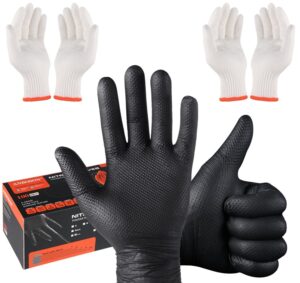
The cotton liners provide insulation from the heat, while the nitrile gloves create a food-safe outer layer that is easy to replace when it gets greasy or dirty. This combination allows me to lift briskets, handle pork butts, shred pulled pork, and slice meat without constantly changing gloves.
Another advantage is flexibility. Unlike bulky BBQ gloves, this setup still allows you to grip a knife, pull bones from pork, and perform detailed tasks around the cutting board.
Pros
- Excellent dexterity and control
- Comfortable for long BBQ sessions
- Easy to replace dirty nitrile gloves
- Food-safe and sanitary
- Great for handling, slicing, and shredding meat
- Affordable compared to many specialty BBQ gloves
Cons
- Not designed for direct flame exposure
- Less protection than heavy-duty neoprene gloves
- Nitrile gloves need occasional replacement
My Take
This is the glove setup I reach for most often when cooking barbecue. Whether I’m moving a brisket from the smoker, pulling pork, or slicing ribs, cotton liners and nitrile gloves give me the best combination of heat protection and control.
Oil-Resistant Neoprene BBQ Gloves – Best for Cutting Hot Meat
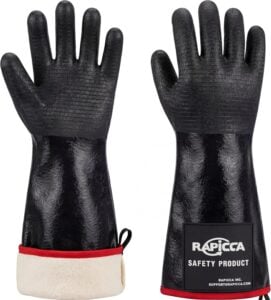
When I’m slicing brisket, pork butt, or ribs, I want a glove that protects my hands from the heat while still providing a secure grip. That’s where neoprene BBQ gloves shine.
Unlike many fabric gloves, neoprene gloves are waterproof and resistant to grease, meat juices, and barbecue sauce. This makes them especially useful when cutting freshly smoked meat that is still hot and dripping with juices.
The textured surface helps improve grip when handling large cuts of meat, and the extended cuffs provide additional protection for your wrists and forearms. While they are slightly bulkier than cotton liners and nitrile gloves, they offer excellent protection when working with hot barbecue straight from the smoker.
Pros
- Waterproof and grease-resistant
- Excellent heat protection
- Secure non-slip grip
- Easy to clean after use
- Long cuffs help protect wrists and forearms
- Great for handling large cuts of hot meat
Cons
- Less dexterity than nitrile gloves
- Can feel bulky during detailed knife work
- Hands may get warm during long prep sessions
My Take
If you regularly slice briskets, pork butts, or large roasts straight off the smoker, neoprene gloves are hard to beat. The waterproof construction keeps hot juices away from your skin, while the textured grip makes handling heavy cuts of meat much easier. They aren’t my first choice for delicate trimming work, but for moving and cutting hot barbecue, they do an excellent job.
Oil-resistant, heat-resistant, and waterproof neoprene gloves: B0748DCDGC
Insulated Heat-Resistant Meat Gloves – Best for Shredding Hot Meat
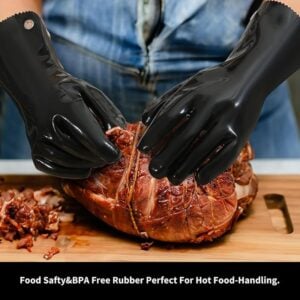
Shredding a hot pork butt by hand can quickly become uncomfortable without the right gloves. That’s why I like insulated heat-resistant gloves when preparing pulled pork. They provide enough protection to handle hot meat while remaining flexible enough to pull, separate, and shred large pieces of pork.
These gloves are designed to balance heat protection with comfort and movement. Unlike some bulky BBQ gloves, they allow you to grab and pull meat apart without feeling like you’re wearing oven mitts.
They’re also useful for handling smoked chicken, pulled beef, and other barbecue meats that need to be broken down while still warm. The extra insulation helps reduce hand fatigue during large shredding jobs, especially when preparing food for a crowd.
Pros
- Excellent for shredding pulled pork
- Good balance of protection and flexibility
- Comfortable for extended use
- Better dexterity than many heavy-duty BBQ gloves
- Useful for pork, chicken, and beef
Cons
- Not waterproof
- Can absorb grease and meat juices
- Not ideal for direct contact with open flames
- Usually require more cleaning than nitrile gloves
My Take
If you regularly make pulled pork, these gloves are worth considering. The added insulation allows you to start shredding sooner without constantly stopping because the meat is too hot to handle. While I still prefer cotton liners and nitrile gloves for many BBQ tasks, these gloves do an excellent job when it comes to breaking down a pork butt, shredded chicken, or pulled beef.
Insulated, heat-resistant, flexible meat gloves: B0CH9QX22T
What I Use Around My Smoker
Over the years, I have accumulated several pairs of gloves because no single glove is perfect for every BBQ task. For loading charcoal, I use leather or welding gloves. For food prep, I use disposable vinyl gloves. When handling hot meat, I wear heat-resistant gloves underneath disposable gloves so I can safely move briskets, pork butts, and ribs without burning my hands.
- For regular handling, I use some cheap work gloves.
- For handling my charcoal starter, I use leather gloves or welding gloves.
- For food preparation, I use vinyl gloves.
- For hot food handling, I use heat-resistant gloves under my vinyl gloves.
Before handling any brisket or pork butt, I always verify the internal temperature with a BBQ thermometer.
Types of BBQ Gloves for Handling Hot Meat
There are several types of BBQ gloves available for handling hot meat, and each has its strengths and weaknesses.
Eddie’s Tip! The best choice gloves depends on how you cook and what tasks you do most often around the smoker or grill.
Neoprene BBQ Gloves
Neoprene gloves are one of the most popular choices for serious barbecue cooks. They are waterproof, easy to clean, and provide excellent protection from hot meat, grease, and cooking juices.
I like neoprene gloves when I’m moving a brisket, pork butt, or rack of ribs from the smoker because they provide a secure grip even when things get messy. The downside is that they can feel bulky for detailed tasks like slicing meat.
Cotton Glove Liners and Nitrile Gloves
Many competition teams and backyard pitmasters use cotton glove liners covered by disposable nitrile gloves. The cotton liner provides insulation from the heat while the nitrile glove keeps everything food-safe and easy to clean.
This setup offers excellent dexterity and makes it easy to switch to a fresh nitrile glove whenever it becomes greasy. It’s one of the most versatile options for handling, shredding, and serving barbecue.
Aramid Fiber Gloves
Aramid gloves are made from heat-resistant fibers similar to those used in protective clothing. They are designed to handle high temperatures while remaining flexible enough for everyday grilling and smoking tasks.
These gloves work well when handling hot grates, cast iron cookware, and barbecue equipment. However, because they are not waterproof, hot grease or meat juices can still transfer heat through the glove.
Silicone BBQ Gloves
Silicone gloves are waterproof and easy to wash. Most feature textured surfaces that provide extra grip when handling hot food or cookware.
While silicone gloves offer good protection from moisture and heat, they can sometimes feel stiff and less natural than neoprene or cotton-and-nitrile combinations.
Leather BBQ Gloves
Leather gloves are commonly used when working around fireboxes, charcoal grills, and offset smokers. They provide excellent protection from radiant heat and sparks while tending a fire.
I prefer leather gloves for fire management rather than food handling. They aren’t as easy to clean as food-safe gloves and can absorb grease and cooking odors over time.
Gloves make handling hot meat easier, but you still need to know the proper internal meat temperatures before serving.
How to Choose Gloves for Handling Hot Meat
Not all BBQ gloves are designed for the same job. Some are better for lifting large cuts of meat off the smoker, while others provide the dexterity needed for slicing brisket or shredding pulled pork.
Here are the most important factors I consider when choosing gloves for handling hot meat.
Heat Resistance
The first thing to look at is how much heat the gloves can handle. If you regularly cook briskets, pork butts, or ribs. Higher heat resistance provides more protection, but it can also make gloves bulkier and less flexible.
Eddie’s Tip! You’ll need gloves that can safely handle hot meat straight from the smoker.
Grip
Some gloves offer excellent heat protection but make it difficult to grip a knife or handle small tasks. If you plan to slice brisket, trim meat, or work with food for extended periods, look for gloves that provide a good balance between protection and flexibility.
Waterproof vs. Breathable
Waterproof gloves, such as neoprene models, are popular because they protect against hot juices, grease, and moisture.
Breathable gloves are often more comfortable during long cooks but may not provide the same protection when handling wet or greasy meat.
Food Safety
Any gloves you use around food should be food-safe and easy to keep clean. Many pitmasters use disposable nitrile gloves over cotton liners because they can quickly replace the outer glove whenever it becomes dirty or greasy.
Grip
A hot brisket or pork butt can be surprisingly heavy and slippery. Gloves with textured surfaces or non-slip coatings provide better control when lifting, carrying, and shredding meat.
Easy Cleaning
BBQ can get messy. Grease, sauce, and meat juices quickly build up on gloves. I always prefer gloves that are easy to wash or have replaceable outer layers to make cleanup faster after a cook.
Comfort
Even the most heat-resistant gloves won’t help much if they’re uncomfortable to wear. You need gloves for the tasks you perform most often around the smoker and grill.
Eddie’s Tip! Look for gloves that fit properly and allow enough movement
If you’re new to smoking meat on a smoker, proper gloves are just one of several tools that make the process easier.
Frequently Asked Questions
Here are some of the most asked questions about gloves that are used in the food industry.
Do Chefs Wear Gloves When Handling Meat?
Not always. Many professional chefs handle meat with clean bare hands and rely on proper handwashing practices to maintain food safety. In commercial kitchens, frequent and thorough handwashing is often more important than wearing gloves alone.
Can I Handle Meat With Latex Gloves?
Yes, you can safely handle meat with latex gloves as long as the gloves are food-safe and in good condition. However, wearing latex gloves is not required for safe food preparation. Proper handwashing before and after handling meat is still one of the most important food safety practices.
When Should You Not Use Nitrile Goves?
You should not use nitrile gloves by themselves when handling extremely hot food, working near open flames, or managing a smoker fire. Nitrile gloves can melt or degrade when exposed to high temperatures, which may lead to burns.
What Are Common Food Glove Violations?
Common food glove violations include failing to wash hands before putting on gloves, wearing the same gloves for too long, touching multiple foods without changing gloves, and using damaged or contaminated gloves. Improper glove use can increase the risk of cross-contamination and foodborne illness.
Gloves for Handling Hot Meat – My Experience
During my time in the restaurant business, I had to do everything by the health department rules, and by doing that, I learned a lot.
There are several types of gloves I used, and to be honest, the most used were the vinyl gloves. I also had a pair of heat-resistant gloves that I used to get hot pans out of the oven.
At my grill and smoker, I use more types of gloves. For the simple reason that I handle different types of equipment.
For dirty grill racks, I don’t use expensive leather gloves, but cheap work gloves. For hot food, I mostly use some heat resistant cotton gloves under my vinyl gloves.
If I use my charcoal starter, I have a pair of welding gloves that work fine for that purpose.
Good gloves are one of the most popular pellet grill accessories I use most often during a cook.
Altogether we all have to figure out what works in our specific situation, and there is no one-size-fits-all.
I hope my writing here helps you find the best gloves for handling hot meat, and if you have a pair or style that you prefer, leave it in the comments below.
Eddie van Aken
Eddie van Aken is the founder of The Grilling Dutchman, where he shares practical BBQ tips, smoking techniques, recipes, and grill reviews based on real-world experience. After years of cooking on pellet grills, charcoal grills, smokers, and kamado cookers, he focuses on helping backyard cooks get better results with less guesswork. Learn more about Eddie van Aken. Learn more about Eddie van Aken.