
If you just bought an offset smoker, it i tempting to throw some meat on and get cooking right away.
I get it. Been there, done that myself.
But offset smoker first use is one step you really don’t want to rush. What you do before that first cook affects how your smoker runs, how steady your fire is, and how your food ends up tasting.
First use isn’t about making BBQ.
It’s about getting the smoker ready.
This is the stage where you:
- Burn off factory oils and residue
- Season the inside of the cooker
- Learn how your offset behaves with a live fire
It is also your chance to spot small issues early and get comfortable with offset smoker fire management. dialing in heat and airflow, before there’s meat on the line.
In this guide, I will walk you through what to expect and how to get your offset smoker ready for its first real cook, step by step.
Eddie’s Tip! Taking a little extra time now makes every cook after this easier.
Why Offset Smoker First Use Matters
Offset smokers are built from steel, and when they’re new, that steel hasn’t been exposed to heat yet. Oils from manufacturing, dust, and coatings can still be inside the cooker.
First use gives you a chance to burn all of that off before food ever hits the grates.
This step also protects the smoker itself. A proper first burn helps the inside surfaces heat evenly and start forming a protective layer. That layer helps prevent rust and makes the smoker easier to maintain over time.
First use isn’t just about the smoker. It’s also about you.
Running the smoker empty lets you learn how your offset behaves without pressure:
- How quickly it heats up
- How airflow moves through the cooker
- How the fire responds to adjustments
That knowledge pays off every time you cook after that.
First use is just one part of learning how to run an offset smoker the right way. If you want a bigger-picture look at how offsets work, what to expect as a beginner, and how all of this fits together, I break it all down in my offset smoker basics guide.
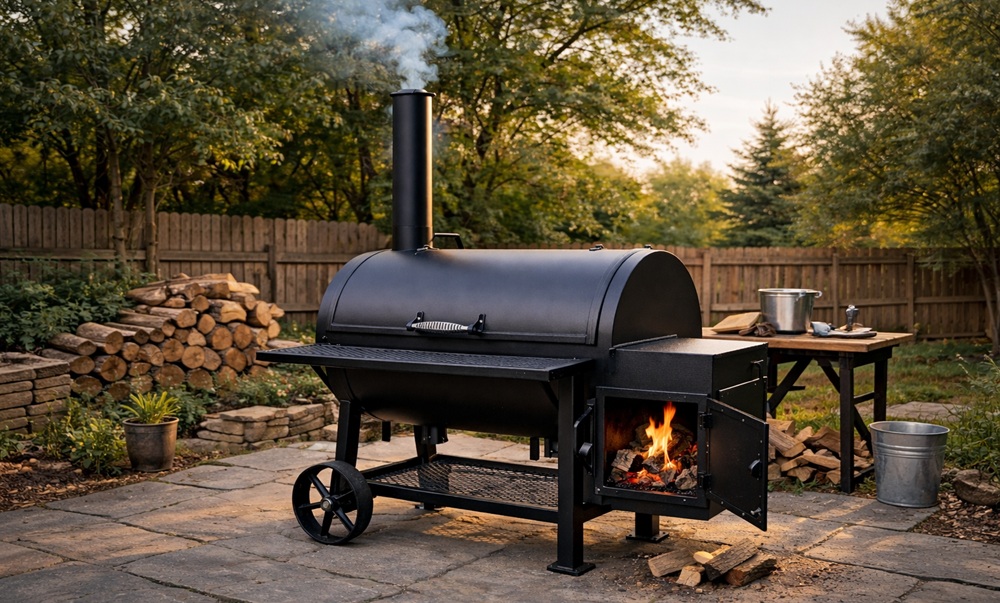
A simple photo of an empty offset smoker warming up or a first seasoning burn would fit perfectly right after the second paragraph.
What to Do Before Lighting Your First Fire
Before you light anything, take a few minutes to go over the smoker. Even brand-new offset smokers can have dust, packing material, or leftover oils inside the cooking chamber and firebox.
A quick wipe-down goes a long way. You’re just removing anything you don’t want heating up or smoking later.
This is also the right time to check how everything fits and moves:
- Make sure doors open and close smoothly
- Check that vents move freely
- Look for anything that feels loose or out of place
It’s much easier to spot small issues now than during a hot cook.
Eddie’s Tip! Taking a few minutes to get familiar with the smoker builds confidence.
You’ll know where everything is, how it operates, and you won’t feel rushed once the fire is going.
A calm start makes the rest of the process smoother.
A simple photo of the open cook chamber or firebox during a pre-check fits well right after the bullet list. Nothing fancy—just a real, ready-to-go smoker.
Seasoning an Offset Smoker (High-Level Overview)
Seasoning an offset smoker means heating it up so the inside surfaces are protected and ready for cooking. As the smoker heats, leftover oils burn off and the steel begins to develop a protective layer.
That layer helps prevent rust and keeps flavors clean during future cooks.
Seasoning also gives you your first real look at how the smoker reacts to heat. With no food involved, you can focus on learning:
- How air moves through the smoker
- How temperature builds
- How well the cooker holds heat over time
There’s no pressure at this stage. You’re just watching and learning.
Think of seasoning as preparing the smoker for a long life of cooking. It’s a simple step, but it plays a big role in how well your offset smoker performs down the road.
A photo of the smoker warming up empty, with light heat coming up and no food inside, fits perfectly right after the bullet list.
Your First Fire: What to Expect
Your first fire in an offset smoker won’t look or smell like a normal cook.
That’s normal.
You may notice strong odors, thicker smoke at first, and temperatures that don’t feel very stable. This fire is doing the work of burning off residue and preparing the inside of the smoker. It’s not meant to look pretty.
It is also common to see the smoker react more than you expect:
- Temperatures may rise faster or slower than planned
- Smoke color can change as the cooker heats up
- The fire may need more attention than you expected
None of this means that something is wrong. It is part of a new smoker settling in.
The key here is not to panic.
First use is about observation, not perfection. Let the smoker run, watch how it behaves, and take mental notes.
Eddie’s Tip! That experience will make your first real cook feel far more controlled and predictable.
A photo of the smoker during the first burn—thicker smoke, no food, calm setup—fits well right after the bullet list. It helps normalize what beginners are seeing.
Offset Smoker First Use Mistakes to Avoid
One of the most common mistakes is trying to cook food during the first burn.
Mistake #1: Cooking food too soon
First use is meant for prep and learning, not eating. Putting food on during the first burn can lead to off flavors and a frustrating experience right out of the gate.
Another issue is using too much fuel.
Mistake #2: Overloading the fire
New owners often think more fire will speed things up. Instead, it creates excessive smoke, strong smells, and temperatures that feel out of control. First use works best when the smoker heats up gradually.
Closing vents too early is another trap.
Mistake #3: Restricting airflow too soon
Shutting vents before the smoker is fully heated can lead to dirty smoke and an unstable fire. During the first use, it is better to let the smoker breathe and observe how it naturally runs.
If something feels chaotic during first use, it’s usually because the fire is too big or the airflow is too restricted.
Eddie’s Tip! Slow down and let the smoker come up to temp on its own.
A simple photo of a clean, lightly loaded firebox during first use works well here. It visually reinforces the idea of less is more.
When Your Offset Smoker Is Ready to Cook
You will know your offset smoker is ready when the strong factory smells are gone and the inside looks clean and dry. The smoke should smell neutral, not sharp or chemical, and the cooker should feel settled instead of reacting wildly to heat.
Here are the signs you’re looking for:
- No lingering factory odors
- Clean, neutral-smelling smoke
- Even heating across the cooker
- Predictable temperature changes
The smoker doesn’t need to be perfectly stable. It just needs to respond in a way that makes sense as it warms up and cools down. Doors, vents, and dampers should all be moving freely.
Once you reach this point, you’re past the prep stage.
Your offset smoker is seasoned, broken in, and ready for its first real cook without unwanted flavors getting in the way.
What to Cook First on an Offset Smoker
For your first real cook, it’s best to keep things simple. Offset smokers take some getting used to, so forgiving meats help you focus on the process instead of stressing about perfection.
You want cuts that handle small temperature swings without falling apart.
Good first-cook options include:
- Chicken
- Pork shoulder
- Ribs
Eddie’s Tip! These meats cook well with steady heat and don’t punish small mistakes.
They give you room to practice fire control, airflow, and timing without feeling rushed or frustrated.
The goal of your first cook is not to impress anyone.
It is to get comfortable running the smoker, watching the fire, and building confidence for the next cook.
Once that feels natural, everything else gets easier.
A simple, real photo of one of these meats on the offset—nothing fancy, mid-cook—is perfect here. It reinforces the idea of learning, not showing off.
Learning Curve After Your First Cook
Your first cook on an offset smoker probably won’t be perfect.
That’s okay.
Small mistakes are part of the learning process. Temperatures may wander, timing might feel off, and the fire may need more attention than you expected. None of that means you’re doing it wrong.
Each cook teaches you something new about how your offset smoker behaves:
- How long fuel lasts
- How the smoker reacts to airflow changes
- When to let things ride and when to adjust
Those small observations add up faster than you think.
The important thing is to keep cooking.
The more time you spend with your offset smoker, the more natural everything feels. First use is just the starting point, not the finish line.
One of the skills that really improves after your first few cooks is fire control. Learning how to manage a clean, steady fire takes time, and it’s a big part of getting comfortable with an offset smoker. I break that down in detail in my offset smoker fire management guide.
Offset Smoker First Use – My Experience
The first time I fired up an offset smoker, I learned pretty quickly that slowing down pays off. Taking the time to prep the smoker, run a proper first burn, and learn how it reacts made every cook after that easier. Nothing felt rushed, and I wasn’t guessing my way through it.
First use isn’t about getting BBQ on the table. It’s about building a foundation. Once that’s done, the smoker feels less intimidating and a lot more fun to cook on. If you give yourself that time up front, your offset smoker will reward you for years to come.
Eddie van Aken – The Grilling Dutchman
Eddie van Aken is the founder of The Grilling Dutchman, where he teaches practical, no-nonsense BBQ and outdoor cooking. With years of hands-on experience working with grills, smokers, and live fire, he focuses on techniques that actually work in real backyards.
When he’s not cooking, Eddie tests and reviews outdoor gear and equipment for PracticalBackyard.com. Learn more about Eddie van Aken.