
Fire management is the most important skill to learn when cooking on an offset smoker. You can have great meat and a solid smoker, but if the fire isn’t right, the cook will never fully come together.
That is why offset smoker fire control matters so much.
This guide starts with the big picture. I will explain what fire management really means on an offset smoker, why it’s harder than on other cookers, and what your fire and smoke are trying to tell you while you cook.
If you are new to offset smoking, don’t stress.
Eddie’s Tip! Everyone struggles with fire control in the beginning.
It is normal and part of the process.
Once you understand how an offset smoker breathes and what a clean fire looks like, everything else gets easier. Steady heat makes more sense. Smoke quality improves. And you stop feeling like you’re fighting the cooker all day.
This offset smoker fire managing guide is here to help you build that foundation so you can cook with clean smoke, steady heat, and a lot less frustration.
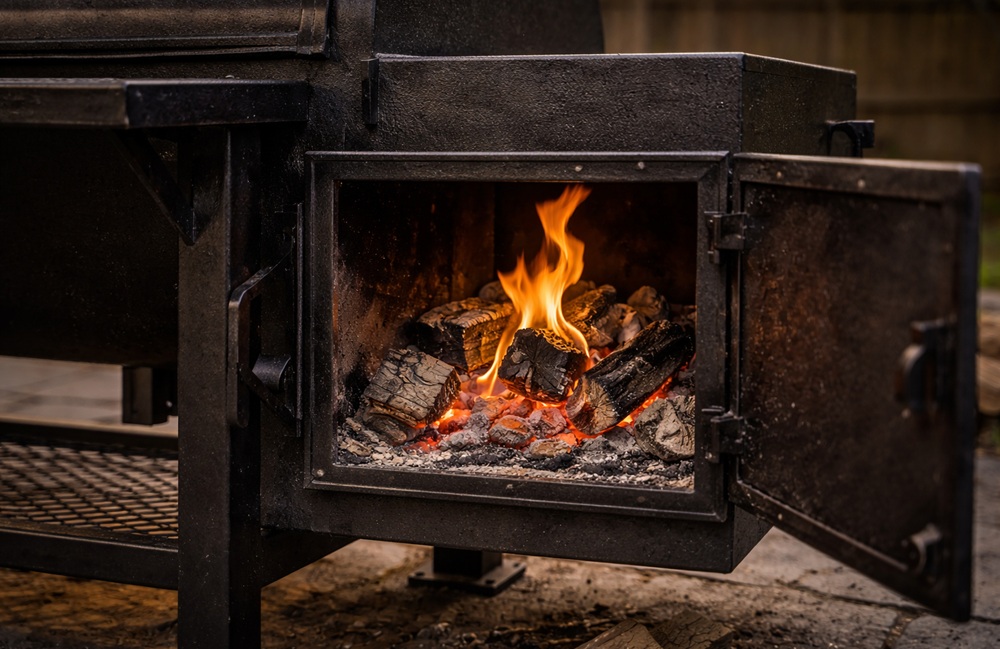
What Fire Management Means on an Offset Smoker
Fire management on an offset smoker is about controlling how the fire burns, not just how hot the smoker gets. A good fire produces steady heat and clean smoke. A bad fire can hit the right temperature and still ruin the food.
On an offset smoker, the fire is alive. It needs air, fuel, and space to burn properly. Fire management means paying attention to how those things work together instead of relying on dials or settings.
- The goal isn’t to lock in a number.
- The goal is to keep the fire burning clean and consistent.
Once you understand that fire management is about balance, offset smoking starts to make more sense.
Fire management is just one part of learning how an offset smoker works as a whole. If you are looking for the full picture, I break everything down step by step in my offset smoker guide, from first use to real cooks.
Eddie’s Tip! Temperature becomes the result of a good fire, not something you fight directly.
Why Fire Control Is the Hardest Part of Offset Smoking
Fire control is hard on an offset smoker because nothing is automated. There is no controller holding the temperature steady and no burner regulating the flame.
Everything depends on how the fire burns and how air moves through the smoker. If you like to read more about it, I suggest reading my offset smoker first use article.
Small changes can have a big impact:
- Adding fuel
- Opening a door
- Adjusting airflow
Each of these can affect the fire faster than most beginners expect. That’s why it often feels like you are chasing temperature instead of cooking.
Eddie’s Tip! That doesn’t mean offset smokers are unpredictable. They just require attention and practice.
Once you learn how your smoker reacts, fire control becomes calmer, more predictable, and much easier to manage.
Fire control gets easier when the smoker is properly prepped and broken in. If you’re still early in the process, it helps to start with a solid foundation. I walk through that step by step in my offset smoker first use guide, so you know exactly what to do before and during your first burn.
Clean Fire vs Dirty Fire (What Smoke Is Telling You)
The easiest way to judge an offset smoker fire is by looking at the smoke. Smoke tells you more about what’s happening than any thermometer ever will.
A clean fire produces light, almost invisible smoke. It smells mild and slightly sweet, not sharp or heavy. This is the kind of smoke that builds flavor slowly without overpowering the meat.
A dirty fire looks and smells very different. Thick white or gray smoke usually means the fire isn’t burning clean. That can happen when:
- The fire doesn’t have enough airflow
- The fuel isn’t burning completely
- The fire is struggling to stay lit
Dirty smoke can turn food bitter fast, even if the temperature looks fine.
Eddie’s Tip! Learning to read smoke is one of the first big steps in fire management.
Once you can tell the difference between clean and dirty smoke, you will start fixing problems at the firebox before they show up on the food.
Building a Stable Fire (High-Level Overview)
A stable fire is one that burns steadily without big swings in heat or smoke. On an offset smoker, that usually means a solid bed of coals and a fire that stays active instead of flaring up and dying down.
Stability comes from consistency. A fire that’s constantly struggling to stay lit will produce uneven heat and dirty smoke.
The goal sits in the middle.
That is where the fire burns evenly, responds predictably, and doesn’t need constant fixing. When your fire is stable, the smoker becomes much easier to manage.
Temperatures move slower, smoke stays clean, and you spend less time reacting and more time cooking.
Eddie’s Tip! A fire that’s burning too aggressively can spike temperatures and dry out food.
Image suggestion: a close-up photo of a steady coal bed with a small, controlled flame works well here. It visually reinforces what “stable” actually looks like.
Airflow and Draft: How an Offset Smoker Breathes
An offset smoker works because it can breathe. Air enters through the firebox, feeds the fire, moves through the cooking chamber, and exits through the chimney.
That movement of air is called draft, and that is what keeps the fire burning clean.
When airflow is steady, everything works together:
- The fire gets enough oxygen
- Smoke keeps moving instead of lingering
- Heat spreads more evenly through the cooker
When airflow is restricted, the fire struggles. Smoke quality drops, and even if heat builds up, the smoke often turns heavy and unpleasant.
Eddie’s Tip! Thinking of an offset smoker as a system instead of a box helps a lot.
The firebox, cooking chamber, and chimney all work together. When that flow is working properly, fire management feels calmer and much easier to control.
Image suggestion: a simple airflow visual works best here. Either a diagram showing air moving from the firebox to the chimney, or a real photo with light smoke exiting the stack. Place it right after the first paragraph.
Adding Fuel Without Ruining the Fire
Adding fuel is one of the moments where an offset smoker fire can go wrong fast. Every time you add wood or charcoal, you change how the fire burns, how much heat it produces, and how the smoke behaves.
When fuel is added too aggressively or at the wrong time, the fire can:
- Smother itself and produce dirty smoke
- Flare up and spike temperatures
- Take longer to settle back down than expected
That’s why many beginners feel like the smoker behaves well until they touch the fire again.
Eddie’s Tip! Try to keep the size of the wood you are adding as consistent as you can.
One other tip I can give you is to choose one type of wood for your offset smoker and not mix other woods.
It is about understanding that every fuel addition affects airflow, heat, and smoke at the same time. When you respect that balance, the fire stays calmer and more predictable.
Less fuel, added at the right time, beats more fuel added too often.
Image suggestion: a simple photo of a small wood split being added to a clean coal bed works well here. It visually reinforces control instead of excess.
Common Fire Management Problems (and Why They Happen)
One of the most common fire management problems is thick, heavy smoke. This usually means the fire is not getting enough air or the fuel is not burning completely.
The fire may still be hot, but it isn’t burning clean.
Another issue is wide temperature swings. These often come from an unstable fire that flares up and then dies down. Adding too much fuel at once or letting the fire struggle for too long can both cause this cycle.
Fires that keep going out are another frustration for beginners. This usually means the fire never fully established itself in the first place.
Without a strong coal bed and steady burn, the fire has a hard time recovering once it starts to fade.
Here’s the pattern behind most fire problems:
- Not enough airflow
- Too much fuel at once
- A weak or inconsistent coal bed
Knowing why these problems happen makes them far less stressful. Most fire issues are part of the learning process, not a sign that something is wrong with your smoker.
Image suggestion: a photo of a struggling fire with heavy smoke, followed later by a clean fire image elsewhere on the page, helps readers visually connect cause and effect.
How Fire Management Gets Easier With Practice
Every offset smoker has its own personality. Even two smokers from the same brand can behave a little differently. Steel thickness, airflow, and even where the smoker sits can all change how it runs.
That’s why experience matters so much with offset smoking.
Each cook teaches you something new about how your smoker responds to fire, fuel, and airflow. Over time, you stop reacting to every small change and start recognizing patterns instead.
This is when things begin to feel easier.
The more time you spend cooking on your offset, the more predictable it becomes. Fire management stops feeling random and starts feeling familiar.
That confidence only comes from practice, and there are no shortcuts around it.
Offset Smoker Fire Management – My Experience
Fire management was the hardest part of learning my offset smoker, and it’s also the most rewarding. Once I stopped chasing numbers and started paying attention to the fire itself, everything got easier.
Clean smoke, steadier temps, and better food all followed naturally.
What I’ve learned is that fire management isn’t about perfection. It’s about awareness and patience. Every cook teaches you something, and over time, you build a feel for how your smoker wants to run.
When that happens, managing the fire stops feeling like work and starts feeling like part of the fun.
Eddie van Aken – The Grilling Dutchman
Eddie van Aken is the founder of The Grilling Dutchman, where he teaches practical, no-nonsense BBQ and outdoor cooking. With years of hands-on experience working with grills, smokers, and live fire, he focuses on techniques that actually work in real backyards.
When he’s not cooking, Eddie tests and reviews outdoor gear and equipment for PracticalBackyard.com. Learn more about Eddie van Aken.