

When I first started smoking meat, I figured more smoke meant more flavor.
So I loaded up the wood and let it go like an Indian giving smoke signals.
What I ended up with was meat that tasted like a burnt log. Bitter, acid, and disappointing.
Sound familiar?
It didn’t take me long to realize that not all smoke is good smoke.
In this post, I will walk you through exactly how I learned the art of mastering smoke and getting clean, flavorful smoke. The kind that kisses your food instead of choking it out.
Whether you’re working with a stick burner, pellet smoker, or charcoal setup, the principles are the same. Let’s get started.
Also, read my what you need to smoke meat at home article to get started with smoking meat at home.
The Problem with Dirty Smoke
Not all smoke is created equal.
Thick white or grey smoke may look impressive, but it often means:
- Incomplete combustion
- Excess moisture or smoldering wood
- Bitter, sour flavors that overpower your meat
Instead, you want “thin blue smoke”, an almost invisible stream of clean-burning flavor.
Thin Blue Smoke vs. White Clouds
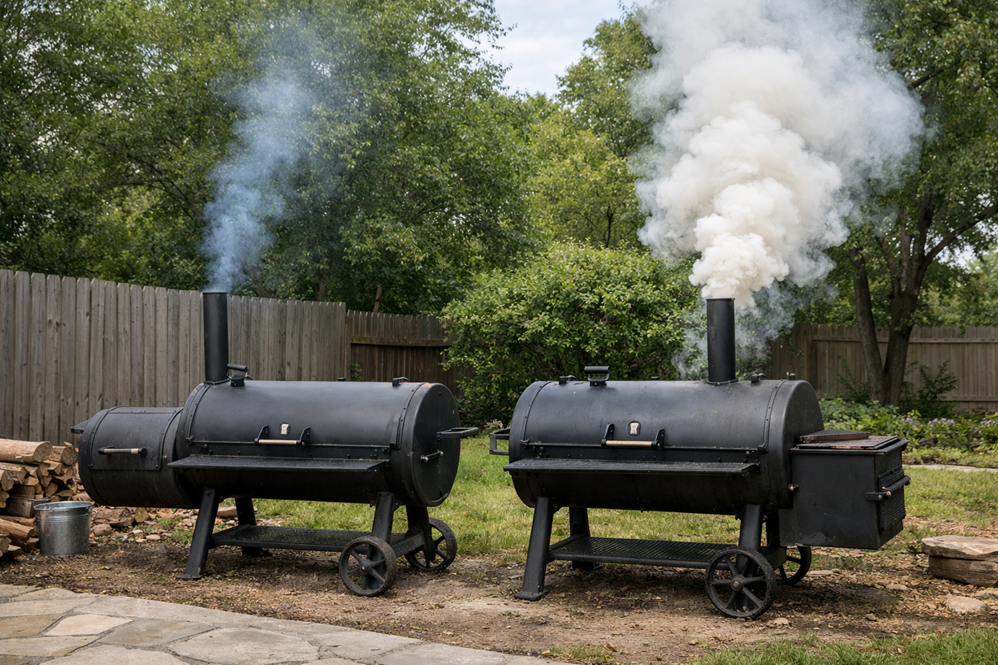
Here’s a quick comparison:
Type of Smoke Appearance Flavor Impact What It Means
Thin Blue Smoke Almost invisible, blue tint Clean, mild, balanced. This means an Ideal combustion and airflow
White Thick Smoke, white, puffy, Acrid, bitter, overpowering. This means the wood is smoldering or wet
Black Dark Smoke, heavy, oily, Sharp, chemical, unpleasant. Grease fire or poor ventilation
Want a deep dive on this topic? Check out Smoke Control: Thin Blue Smoke vs. White Clouds
What Clean Combustion Looks Like
Whether you’re using logs, chunks, chips, or pellets, the key is efficient, clean burning.
You want your fuel to catch fire, burn hot and clean, and maintain steady airflow.
Signs of clean combustion are:
- A hot, stable fire (not smoldering)
- Consistent smoke, not erratic or billowing
- No overly sharp or chemical smells from the exhaust
Airflow: The Hero Of The Story
Clean smoke starts with proper airflow. Without enough oxygen, even good wood will burn dirty.
Here’s what I do:
I keep my intake and exhaust vents open unless you’re dialing down the heat. Don’t choke the fire.
Use my intake damper (lower vent) to control temp and airflow; leave the exhaust vent mostly open.
Clean out ash and grease regularly to prevent airflow blockages or flare-ups.
You want to know even more? You can dig deeper here: the offset smoker airflow basics
Eddie’s Tip! Don’t “trap” the smoke. Let it flow over the meat and out of the stack.
Wood Selection Matters
Don’t just throw any old wood on your fire. Here’s what to look for:
✅ Good Wood:
- Seasoned hardwoods (oak, hickory, pecan, cherry, apple)
- Dry — 6–15% moisture content
- Clean — no mold, bark, paint, or chemicals
❌ Avoid:
- Green (unseasoned) wood creates thick, wet smoke
- Softwoods like pine — they burn fast and produce a sooty smoke that makes your meat taste horrible
- Bark-heavy wood can add bitterness and burn unevenly
Eddie’s Tip! A small, hot fire with good wood is always better than a large, smoldering pile.
I wrote an in-depth article on how to pick the best wood for offset smokers.
When Meat Takes on Smoke
Here’s something most folks don’t know: smoke absorption slows down after the first few hours.
That’s when the meat’s surface is moist and porous.
- After ~3–4 hours, bark begins to form, and smoke penetration tapers off.
- That’s why managing smoke early in the cook is critical for flavor.
Eddie’s Tip! If your smoke isn’t clean in the first few hours, it’s already too late.
Keep the Fire Small and Hot
One of the best tips I ever got from more experienced people was this:
“A small, clean-burning fire will always beat a big, smoky one.”
Why? Because a small fire burns hotter and cleaner, and is easier to control. It produces just enough smoke without overwhelming the meat.
This applies whether you’re:
- Running a stick burner with splits
- Using lump charcoal with chunks
- Burning pellets in an auger-fed system
How to Get Clean, Flavorful Smoke – My Experience
- ✅ Use dry, seasoned hardwood
- ✅ Build a small, fire
- ✅ Maintain good airflow
- ✅ Watch for thin blue smoke
- ✅ Let the smoke flow, don’t trap it
- ✅ Don’t oversmoke, focus on the first few hours
Mastering Smoke – My Experience
Once I learned to dial in my fire and stop over-smoking, everything changed. My brisket bark was cleaner, my ribs had balance, and my pulled pork didn’t taste like an ashtray.
Getting clean smoke isn’t about guessing. It is about controlling your fire, your airflow, and your wood. And when you nail those three things, your smoker becomes a BBQ smoke flavor machine.
Want to go even deeper into how smoke interacts with meat?
👉 Check out How Low Heat Transforms Meat.
Or revisit the full masterclass in
👉 The Science of Smoke: How Low and Slow Really Works
Eddie van Aken – The Grilling Dutchman
Eddie van Aken is the founder of The Grilling Dutchman, where he teaches practical, no-nonsense BBQ and outdoor cooking. With years of hands-on experience working with grills, smokers, and live fire, he focuses on techniques that actually work in real backyards.
When he’s not cooking, Eddie tests and reviews outdoor gear and equipment for PracticalBackyard.com. Learn more about Eddie van Aken.