
Kamado grills are incredible once you understand them. But early on? They can be frustrating. I have struggled with kamados more than almost any other grill type, not because they are hard, but because they behave differently than people expect.
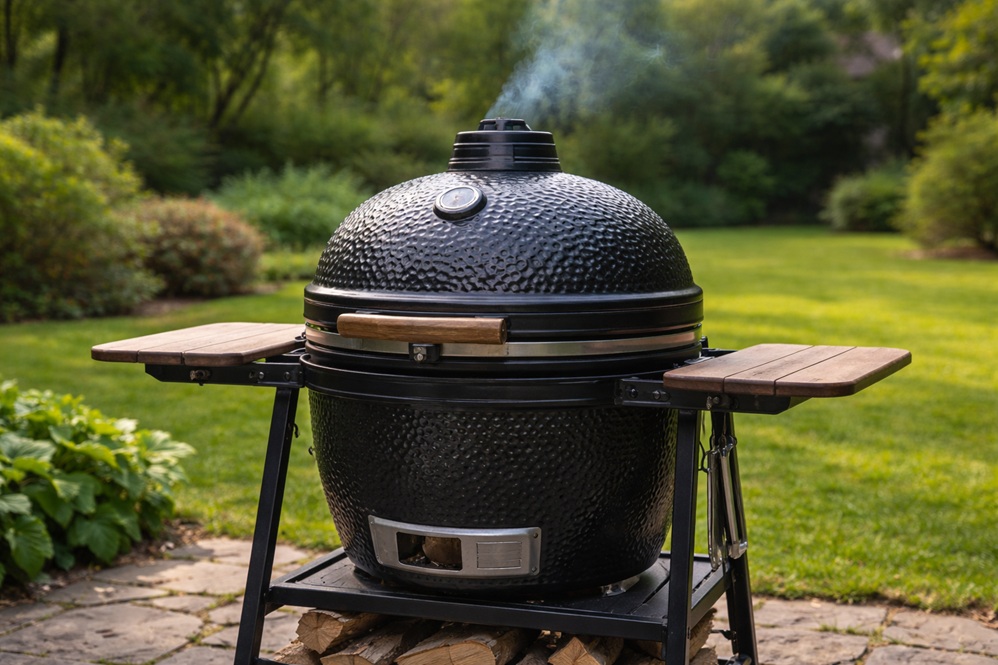
A kamado does not react fast at all. It holds heat. It magnifies small mistakes.
Eddie’s Tip! If you treat it like a regular charcoal grill, it will bite you back.
Here are the most common kamado grill mistakes beginners make, based on the ones I made myself. I will explain why they happen and how to avoid them before you ruin a cook.
Why Kamado Grill Mistakes Happen So Often
Kamados behave differently than other charcoal grills. A kamado grill is a thick ceramic grill. Once it heats up, it stays hot.
That is great for stability, but terrible if you overshoot your target temperature. Beginners expect quick reactions. Kamados don’t work that way.
Small adjustments can have big consequences.
Eddie’s Tip! A small vent change can mean a big temperature swing 10–20 minutes later.
That delay is what tricks people into making mistake after mistake. Believe me, I made most of them myself,
The Most Common Kamado Grill Mistakes Beginners Make
When I started using a Kamado grill, I made about any mistake you can think about. Here are the ones I made, and what I learned from them.
1. Not Letting the Kamado Fully Heat Soak
This is the mistake I see most.
I fired up the grill, saw the thermometer hit its target, and started cooking right away. The problem is that the ceramic had not fully heated yet. Once it does, the temperature keeps climbing, even if you didn’t touch the vents.
How to avoid it:
Once you’re close to your target temp, let the Kamado sit there for 20–30 minutes with the lid closed. Let the ceramic absorb the heat before you add food.
2. Chasing Temperature With the Vents
This is classic kamado panic.
Temp goes up a little. I closed the vent. Then it drops. I opened it. Then it spikes. Now I was chasing the needle all cook long.
How to avoid it:
Make one small vent adjustment. Then wait. Seriously. Give it 10–15 minutes before touching anything again. Kamados reward patience, not micromanaging.
3. Using the Wrong Charcoal (or Cheap Lump)
Not all charcoal works well in a kamado. I started with briquettes and low-quality lump charcoal and found that they produce more ash, and ash kills airflow.
Poor airflow means unstable temps and dirty smoke.
How to avoid it:
Use good-quality lump charcoal with larger pieces. This gives less ash. Better airflow. Better control.
4. Using Too Much Charcoal
I thought that I had to use a lot of fuel, but found out that using more fuel does not mean better temperature control on a kamado.
Once that ceramic is hot, excess charcoal keeps feeding the fire whether you want it or not.
How to avoid it:
Only load what you need for the cook. Low and slow cooks do not need a firebox packed to the rim.
5. Opening the Lid Too Often
There’s a reason they say, “If you’re looking, you’re not cooking.” Every time I opened the lid, I flooded the fire with oxygen. When I closed it again, the fire flared up, and the temperature spiked.
How to avoid it:
Trust the process. Use a thermometer. Peek only when you actually need to.
6. Cooking Before the Smoke Is Clean
I started smoking the meat before I had clean smoke. I found that Kamados are unforgiving here because they hold that smoke inside the dome for a long time.
How to avoid it:
Wait until the smoke turns thin and barely visible before cooking. Clean smoke equals clean flavor.
7. Setting Up Direct and Indirect Cooking the Wrong Way
I used the heat deflector and installed it wrong. I used it when I didn’t have to, and didn’t use it when I should have.
That lead to burned bottoms, undercooked tops, or wild temperature swings.
How to avoid it:
Know your setup before lighting the grill. Decide if the cook is direct or indirect, then build the fire around that plan.
8. Trusting the Dome Thermometer Too Much
Dome thermometers lie. Not on purpose, but they do not tell you what is happening at grate level. where the food sits.
I have seen 50–75 degree differences between dome and grate temps.
How to avoid it:
Measuring temperature at grate-level temperature tells you what the meat is actually experiencing.
9. Ignoring Ash Buildup and Airflow Blockage
By not cleaning on time, I found that ash builds up slowly and quietly. Over time, it restricts airflow and makes temperature control harder and harder.
Beginners often blame the grill when it is really just clogged.
How to avoid it:
Clean out ash regularly. A kamado breathes from the bottom up. If airflow is blocked, everything suffers.
10. Trying to Cook Too Fast on a Kamado
I was rushing preheat, rushing vent adjustments, and rushing the cook itself and found out that it always backfires.
How to avoid it:
Slow down. Kamados reward calm cooks. Once they’re stable, they’re incredibly consistent.
Eddie’s Tip! The biggest lesson I learned with a kamado is patience. Once it’s dialed in, the best move is usually to leave it alone.
How to Avoid These Kamado Mistakes From Day One
After making all these mistakes myself, here is how I avoid them now from the start.
Focus on airflow, not numbers
Temperature is a result of airflow. Control the air, and the temperature follows.
Make one change at a time
If you change two things at once, you will never know what fixed or broke the cook.
Let the grill do the work
Once dialed in, a kamado wants to stay there. Your job is mostly to leave it alone.
If you are new to Kamado grills and like to learn more about brands and models, I suggest reading my Kamado grill reviews to help you out.
Kamado Grill Mistakes – My Experience
I made almost every mistake on this list when I started cooking on a kamado. I rushed preheats. I chased temperatures. I trusted the dome gauge too much. And I definitely used too much charcoal early on.
What surprised me most was how little adjustment a kamado actually needs once you understand it. The learning curve feels steep at first, but once it clicks, everything gets easier.
Eddie’s Tip! Today, my best kamado cooks are the ones where I interfere the least.
I set it up right, let it heat soak, make small vent changes, and let the ceramic do what it does best.
If you are new to kamado cooking and things feel unpredictable, don’t give up. Most problems are not your grill. They are just part of learning how this style of cooker behaves.
One thing that really helped me was writing down my vent settings so I had a starting point for future cooks.
Once you get past these mistakes, a kamado becomes one of the most reliable grills you have ever cooked on.
Eddie van Aken – The Grilling Dutchman
Eddie van Aken is the founder of The Grilling Dutchman, where he teaches practical, no-nonsense BBQ and outdoor cooking. With years of hands-on experience working with grills, smokers, and live fire, he focuses on techniques that actually work in real backyards.
When he’s not cooking, Eddie tests and reviews outdoor gear and equipment for PracticalBackyard.com. Learn more about Eddie van Aken.