
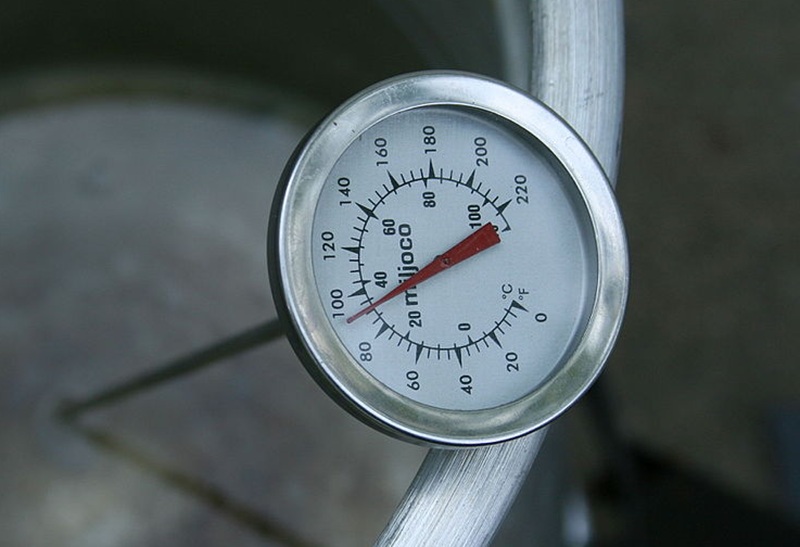
I don’t know about you, but I used to take a new thermometer out of the box and assume it was ready to go. Turns out, some of them are off by a few degrees right from the start.
After a few cooks, they can drift even more. I learned the hard way while cooking pork shoulder one Sunday. The thermometer said 205, and the meat felt like a tire.
Yes, we ordered pizza that night.
If you want accurate temps, you gotta test your thermometer every so often. Thankfully, it only takes a couple of minutes, and you don’t need fancy equipment to do it.
Why Calibration Matters for BBQ Folks
Most home cooks don’t worry about being a degree off. But low-and-slow smoking is a different animal.
On brisket, ribs, or pork shoulder:
- A couple degrees makes a big difference
- especially around stall temps
- or when you’re shooting for juicy, not dry
Eddie’s Tip! If your thermometer is lying, you make cooking decisions based on bad info. And that never ends well.
If you’re still getting used to using a thermometer, here’s my simple breakdown of how to use a meat thermometer the right way.
The Two Ways I Calibrate (What Most Pros Recommend)
If you Google it, every solid article basically gives two methods:
- ice water test
- boiling water test
Both check if your thermometer is reading what it should at known temperatures. Pretty simple stuff.
Ice Bath Test (My Go-To)
This is the most accurate and the easiest. Everybody recommends it.
Here’s how I do it:
- Fill a glass with crushed ice
- Pour in cold water until it’s just barely above the ice
- Stir it for 15–20 seconds
- Stick your thermometer probe right in the middle
- Wait about 30 seconds
It should read 32°F (0°C), or close to it.
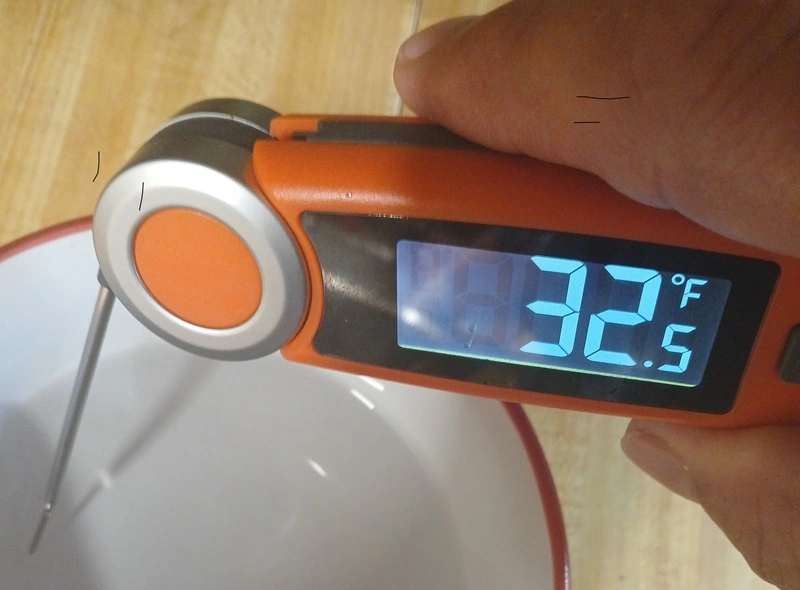
A degree or two off is usually fine. More than that? Time to adjust or replace.
Eddie’s Tip! Don’t let the probe touch the sides or bottom of the cup. That throws everything off. Let the tip sit right in the middle like it’s floating.
Boiling-Water Test
This one’s a little trickier because boiling temps change with altitude. But still is a good test.
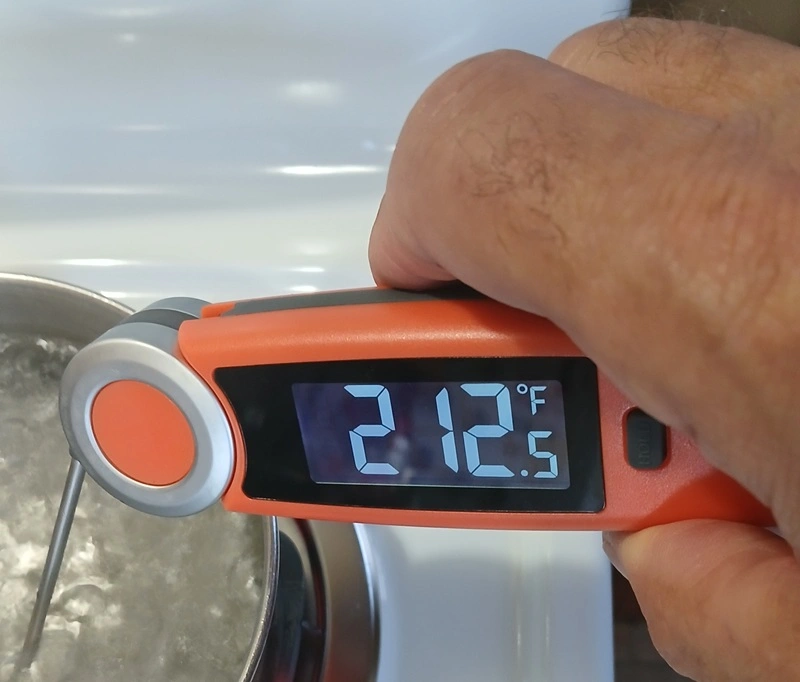
At sea level, water boils at 212°F (100°C).
If you live up a mountain somewhere, it will boil a few degrees lower. I Googled “boiling temp altitude chart,” and here you see what your number should be.
How to check:
- Bring a pot of water to a hard boil
- Stick the probe in the bubbling water
- Don’t hit the bottom or sides
- Wait about 30 seconds
Eddie’s Tip! If it is 2–3 degrees off, I am happy with the reading.
If it’s more than 2–3 degrees off, you have to maybe recalibrate if possible.
Calibration makes sure your thermometer reads correctly, but accuracy is only part of the equation. The way your thermometer connects to your phone also affects how you cook, especially during longer BBQ sessions.
Bluetooth and Wi-Fi thermometers behave very differently once you step away from the grill. I break down the real-world differences, pros, and drawbacks in my guide on Bluetooth vs Wi-Fi meat thermometers for BBQ, so you can decide which setup fits your cooking style best.
Digital vs Analog Thermometers– Any Difference?
Digital and analog thermometers both start to be less accurate over time.
BUT digital is easier to test and adjust. Most good digital thermometers:
- Read faster
- Stabilize quicker
- Easier to check in ice water
Analog dial thermometers usually have an adjustment nut on the back that you can turn to set the needle.
Eddie’s Tip!To be honest, I don’t use analog thermometers anymore. They are too slow for my taste.
How Often Do I Check MY Thermometers?
I test my thermometers:
- When they are new
- After dropping them
- Every couple of months
- Before a “serious” brisket cook
Eddie’s Tip! I don’t test before grilling burgers. I am not that paranoid. But when I am smoking a big piece of meat for hours, I want to know that my temperatures are right.
What If Your Thermometer Is Way Off?
If it’s 3–5 degrees off, you might still use it (just mentally add or subtract).
But if it’s:
- 10 degrees off
- or drifting every other cook
Honestly? I replace it. A bad thermometer costs a lot more in ruined meat than a new thermometer does.
Eddie’s Tip! If your thermometer has a “hold” button, test with and without it. Some cheap models change readings when you lock in the temp. I’ve seen that happen a few times.
My Real-Life Experience
I ruined a pork loin once because I trusted a cheap thermometer that was reading about 8 degrees high. Thought I was pulling at 145… turned out closer to 160.
Dry as a history book. After that, I started checking my thermometers way more often.
These days, I do the ice bath trick before big cooks, and I haven’t had a surprise in a long time.
How To Calibrate a Meat Thermometer – My Experience
Calibrating sounds complicated, but it’s really just stirring ice water and waiting thirty seconds. Do it every so often, especially if you use a budget thermometer.
Eddie’s Tip! Remember that your meat depends on good internal temperature readings.
Some of the latest and newest digital BBQ probe thermometers have the option to adjust after you find that the reading is off. I like that option and will probably save money on the replacement cost.
So take a minute and make sure your thermometer is telling the truth. This can have a huge impact on the outcome of your cook!
Related Posts

Eddie van Aken – The Grilling Dutchman
Eddie van Aken is the founder of The Grilling Dutchman, where he teaches practical, no-nonsense BBQ and outdoor cooking. With years of hands-on experience working with grills, smokers, and live fire, he focuses on techniques that actually work in real backyards.
When he’s not cooking, Eddie tests and reviews outdoor gear and equipment for PracticalBackyard.com. Learn more about Eddie van Aken.