
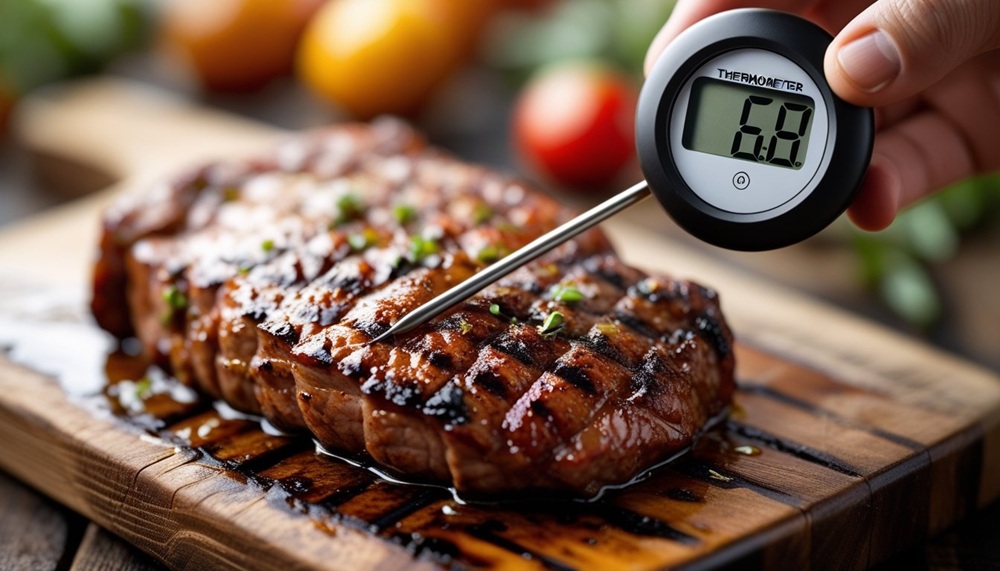
Overcooked chicken, dry ribs, or a steak that’s still raw in the middle? I have done it all. Most of the time, the problem isn’t the grill. It is guessing the temperature.
A good BBQ thermometer takes the guesswork out of cooking and saves a lot of good meat from hitting the trash. These days, you have plenty of options too, from simple wired probes to wireless, Bluetooth, and even smart thermometers that track the whole cook for you.
Eddie’s Tip! Based on my experience, I will help you pick the best BBQ thermometer that fits how you cook.
Top Picks at a Glance
If you just want a quick answer, this is the section to read. Over the years, I have tested and cooked with a lot of BBQ thermometers, and learned that there’s no single “best” one for everyone.
Here are the BBQ thermometer picks, based on the gear I rely on, that make the most sense for different ways of cooking.
The right choice depends on how you cook, how much control you want, and how hands-on you like to be.
- Best Handheld Thermometer –> ChefsTemp FinalTouch X10
- Best Wireless BBQ Thermometer –> Inkbird IBT-26S
- Best Smart BBQ Thermometer –> ChefsTemp Quad Xpro
Each pick is based on real-world cooking, not just specs on a box. I focus on accuracy, ease of use, and whether the thermometer actually makes BBQ easier instead of more frustrating. If one stands out for smoking, grilling, or everyday backyard cooking, I will let you know.
Types of BBQ Thermometers Explained
BBQ thermometers come in a lot of different shapes and styles, and that is where many people get confused. Some stay in the meat the whole cook, others you check by hand, and some let you monitor everything from your phone.
None of them is “better” by default. They are just built for different ways of cooking.
In this section, I break down the main types of BBQ thermometers and explain what each one is actually good for.
Wired BBQ Thermometers
Wired BBQ thermometers are about as simple and reliable as it gets. You stick the probe into the meat, run the wire out of the grill or smoker, and read the temperature on a small base unit. No apps, no pairing issues, and no dropped signals..
I still use wired thermometers a lot, especially for long smoking sessions. They are great when I want steady readings without worrying about batteries dying fast or connections acting up.
For beginners, they are also an easy step up from guessing, without jumping straight into smart tech.
That said, the wire is both the strength and the downside. They are physically tied to the grill, and you have to be careful not to pinch or burn the cable.
Once you understand that limitation, a wired BBQ thermometer can be one of the most dependable tools you’ll own.
If you like things straightforward and don’t need phone alerts or remote monitoring, wired thermometers are still a solid choice.
Eddie’s Tip! Most wireless BBQ thermometers still use probe wires to a base unit. The “wireless” part is how the temperature is sent to you, not how the probe connects to the meat.
Wireless BBQ Thermometers (RF, Bluetooth & WiFi)
Wireless BBQ thermometers are all about freedom. Once the probe is in the meat, you can walk away from the grill and still keep an eye on the temperature. A big deal during long cooks, especially when you are smoking low and slow and don’t want to hover outside all day.
There are a few types of wireless thermometers. RF models use a dedicated transmitter and receiver and are very reliable over longer distances.
Bluetooth thermometers connect straight to your phone and are easy to use, but the range is more limited.
WiFi thermometers go a step further, letting you monitor cooks from anywhere with an internet connection.
Based on my experience, wireless thermometers are best when you already trust your setup and want alerts instead of constant checking.
They are great tools, but the type you choose should match how far you want to wander from the grill and how much tech you’re comfortable with.
I will break down Bluetooth vs WiFi thermometers in more detail in that article, because that choice matters more than most people think.
Wired vs Wireless BBQ Thermometers
The biggest difference between wired and wireless BBQ thermometers isn’t accuracy. It us how much freedom you want while cooking. Both can give solid temperature readings when used correctly.
Wired thermometers keep things simple. You stay close to the grill, check the base unit, and make adjustments as needed. I like them for straightforward cooks and for times when I don’t want to deal with apps or pairing issues.
Wireless thermometers let you step away. You can relax inside, prep sides, or keep an eye on the cook from your phone or a receiver. For long smokes, that convenience is hard to beat.
Based on my experience, wired thermometers are great for beginners and simple cooks. Wireless models ae better for longer sessions or when you want alerts instead of constant checking.
Eddie’s Tip! Wireless vs Wirded thermometer. Neither is “better” across the board. It is about what fits your cooking style.
How Many Probes Do You Really Need?
The number of probes you need depends on what you cook and how hands-on you like to be. More probes are not always better. They’re only useful if you actually pay attention to them.
A single-probe thermometer is perfect for simple cooks like steaks, chicken breasts, or burgers. One probe in the meat tells you what you need to know, and it keeps things simple.
Dual-probe thermometers are where things start to get more useful. One probe goes in the meat, the other tracks the grill or smoker temperature. This setup is great for smoking, where air temperature matters just as much as meat temp.
Multi-probe thermometers really shine when you are cooking more than one piece of meat at the same time, or when you want to track different cuts at once. They’re handy, but only if you actually need that level of control.
Read my ChefsTemp Quad Pro Xpro review to find out why I like this type of thermometer so much for long cooks.
Eddie’s Tip! Based on my experience, most backyard cooks are best off with one or two probes. Anything more is nice to have, not a must.
Instant-Read vs Leave-In BBQ Thermometers
Instant-read and leave-in BBQ thermometers do very different jobs, and most cooks eventually end up using both.
Instant-read thermometers are handheld and used to check the temperature quickly. You open the grill, probe the meat, and get a reading in a few seconds. I use mine all the time for steaks, chicken, and checking doneness near the end of a cook.
Leave-in thermometers stay in the meat for the entire cook. These are usually wired or wireless models and are great for longer sessions like smoking ribs, pork shoulder, or brisket.
They let you track temperatures over time and often come with alarms or app alerts. I wrote about how to use a meat thermometer correctly to help you use it the way it is meant to.
Eddie’s Tip! Based on my experience, an instant-read thermometer teaches you how meat behaves, while a leave-in thermometer gives you convenience and peace of mind.
If I had to pick just one? In the past, I started with an instant-read handheld thermometer. For low-and-slow cooks, a leave-in thermometer becomes hard to live without.
Smart BBQ Thermometers: Are They Worth It?
Smart BBQ thermometers sound impressive, and in some cases, they really are. These are the Bluetooth, WiFi, or both models that connect to an app and track your cook in real time.
Some even try to predict when your meat will be done based on temperature curves.
When they work well, smart thermometers are great for long cooks. You get alerts, temperature graphs, and the freedom to walk away without guessing.
You can read my INKBIRD IBT-26S review and find out why I like them most for overnight or all-day smoking sessions, where constant checking just is not practical.
That said, they are not magic. Apps can glitch, WiFi connections can drop, and predictions aren’t always perfect.
Eddie’s Tip! Based on the ones I used, smart features are helpful, but accuracy and reliability still matter more than fancy graphs.
Best BBQ Thermometers by Cooking Style
Not every BBQ thermometer works well for every type of cooking. The way you grill steaks is very different from how you smoke a pork shoulder, and your thermometer should match that.
For hot and fast grilling, a handheld instant-read thermometer is usually all you need. It’s quick, accurate, and doesn’t slow you down.
For low-and-slow smoking, leave-in thermometers make life easier. Being able to track meat and smoker temperatures over several hours helps you stay consistent without babysitting the fire.
For mixed cooking styles, like grilling one day and smoking the next, a wireless thermometer paired with a good instant-read thermometer gives you the most flexibility.
Matching the thermometer to how you cook matters more than buying the most expensive model on the shelf.
Eddie’s Tip! If you enjoy tech and cook long, slow BBQ often, a smart thermometer can be worth it. If you prefer simple tools that just do their job, a basic wired or instant-read thermometer may suit you better.
For Smoking
Smoking is where a good BBQ thermometer really earns its keep. Low-and-slow cooks can last for hours, and guessing temperatures just does not work here.
You need to know both the meat temperature and what is happening inside the smoker.
For smoking, I prefer leave-in thermometers with at least two probes. One probe stays in the meat, and the other tracks the smoker temperature.
Remember that for smoking, it is very important to know where to place a thermometer probe to prevent false readings.
Based on my experience, instant-read thermometers still have a place during smoking, but they are best used as a backup or final check.
For Grilling
Grilling is fast, hot, and hands-on, which is why I mostly reach for a handheld instant-read thermometer. You don’t want wires everywhere or apps telling you what to do.
You just want a quick, accurate check and back on the heat.
Instant-read thermometers are perfect for grilling because you can check doneness in seconds without overthinking it. They also help you learn timing and feel, which matters a lot when cooking hot and fast.
That said, there are times when a wired or wireless probe thermometer makes sense on the grill, like cooking thicker cuts or indirect grilling.
Eddie’s Tip! If grilling is your main focus, a solid handheld thermometer will cover most of your needs.
What to Look for in a BBQ Thermometer
Not all BBQ thermometers are created equal. Small details make a big difference once you start using them regularly.
I have learned to focus on a few key things instead of getting distracted by flashy features.
Accuracy is number one. A thermometer that is fast but wrong is not helpful. Look for models that give consistent readings and don’t jump around.
Response time matters, especially for instant-read thermometers. Waiting too long with the lid open can throw off your cook.
Probe quality is another big one. Probes should handle high heat, clean easily, and not kink or fray over time.
Ease of use is often overlooked. Clear displays, simple buttons, and easy setup make a thermometer something you’ll actually use.
Calibration is something many people forget. That is why I wrote an article on how to calibrate a BBQ thermometer at home.
Eddie’s Tip! Based on my experience, it’s better to buy a simple, accurate thermometer than a feature-packed one that’s frustrating to use.
Common BBQ Thermometer Mistakes
I have made just about every thermometer mistake you can think of, and most of them come down to rushing or trusting the tool too much.
One of the biggest mistakes is placing the probe wrong. If the tip is not in the thickest part of the meat, your reading won’t mean much. Hitting bone throw things off fast.
I wrote a whole article about where to place a meat thermometer probe to help you with that.
Another common issue is checking temperature too late. Waiting until the meat looks done usually means it is already overcooked. A thermometer works best when you start checking early and often.
I also see people relying on one reading only. Temperatures can vary across a cut, especially on larger pieces of meat. A quick second check can save a cook.
Based on my experience, the thermometer is a guide, not a crutch. Use it correctly, double-check when it matters, and you’ll avoid most of the problems that ruin good BBQ.
Best BBQ Thermometers – My Experience
As I mentioned above, I have bought and used many thermometers throughout the years. Some lasted years, and some lasted just a few months.
Some were useful, and some were just stuffed with useless gadgets. So, to narrow it down, here is what I use at the moment.
One thing I learned is that I stopped trusting grill dome analog thermometers. They are cheap and very unreliable in general.
One thing I always use is a handheld digital thermometer. Another one is a wireless thermometer that is just connected to a box that sits next to my smoker.
The third one I use is a Bluetooth/WiFi thermometer. The receiver I keep with me, or it sits on the table to keep an eye on it.
I also use this one for overnight cooks, so I can set the alarms for my smoker temperature and the internal temperature in the meat.
However, if you are about to buy your first thermometer, I suggest a handheld digital thermometer would be the best buy.
You can use this for about everything, and to be honest, I use mine even when I do low and slow to check the temperature at the end of the cook to double-check.
Eddie van Aken – The Grilling Dutchman
Eddie van Aken is the founder of The Grilling Dutchman, where he teaches practical, no-nonsense BBQ and outdoor cooking. With years of hands-on experience working with grills, smokers, and live fire, he focuses on techniques that actually work in real backyards.
When he’s not cooking, Eddie tests and reviews outdoor gear and equipment for PracticalBackyard.com. Learn more about Eddie van Aken.