
One of the biggest mistakes I see in backyard BBQ is people chasing exact numbers.
They will stare at a thermometer as if it’s a speedometer and panic if it moves by even 5 degrees.
BBQ doesn’t work that way.
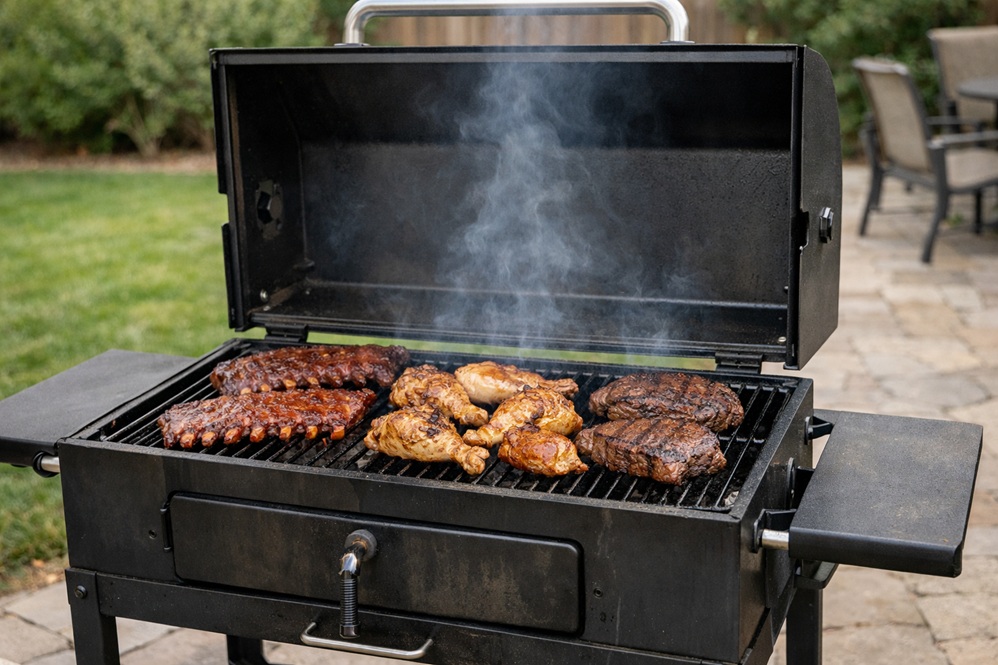
This is why learning the BBQ temperature range matters more than chasing one perfect number.
This guide breaks down BBQ temperature ranges in plain language, without turning it into a science class. Whether you are just starting out or you have been cooking for years, this will help you stop overthinking and start cooking better food.
Eddie’s Tip! BBQ works in ranges, not perfect numbers. Once you understand that, cooking outside gets a whole lot easier.
Why BBQ Temperature Ranges Matter More Than Exact Numbers
BBQ is not baking. You are cooking with fire, airflow, fuel, and weather all working together. That means temperatures naturally move up and down.
If you try to lock your grill or smoker into one exact number, you will fight it all day. You will:
- Open the lid too much.
- Adjust vents too often.
- End up frustrated
Temperature ranges give you breathing room. They let you focus on what actually matters:
- How the meat cooks
- How the fat renders
- How the meat tastes.
Understanding these BBQ fundamentals helps you focus less on exact numbers and more on how heat, smoke, and time work together to cook better food.
Eddie’s Tip! Once I stopped chasing perfect numbers, my BBQ got more consistent, and I enjoyed cooking a lot more
The Three Main BBQ Temperature Ranges
Most BBQ cooking fits into three simple zones. You don’t need charts to understand them. You just need to know what each range is good for.
Low and Slow BBQ (Deep Smoke and Tender Meat)
This is the classic BBQ zone.
Low and slow cooking is a big part of smoking meat basics, where time, airflow, and clean smoke matter more than speed. This range is 225°F – 275°F (107°C – 135°C)
I use this range for:
- Brisket
- Pork shoulder
- Ribs
- Big cuts with lots of connective tissue
In this range, the goal isn’t speed. It is steady heat and clean smoke. The meat stays on long enough for fat to render and collagen to soften.
Eddie’s Tip! When you rush low and slow, you will get dry or chewy meat as a result.
This is also the range where airflow and fire management matter most. Small changes add up over long cooks.
Medium Heat BBQ (The Most Flexible Zone)
This is the most overlooked range, and honestly, where most backyard cooking should happen. This range is from 300°F to 375°F (148°C – 190°C)
Medium heat is perfect for:
- Indirect chicken
- Sausage
- Thicker pork chops
- Reverse-searing steaks
- Finishing low-and-slow cooks
It gives you control without stress. You get good color without burning. You get some smoke flavor without overpowering the meat.
Eddie’s Tip! If I am cooking for my family on a normal day, this is where my grill usually sits.
It’s forgiving, flexible, and great for learning how your grill behaves.
Hot BBQ (Grilling With Purpose)
Hot BBQ isn’t reckless. It’s controlled, intentional heat, and this starts at temperatures above 400°F (205°C)
This range is all about:
- Direct cooking
- Fast searing
- Building crust and char
I use hot cooking for:
- Steaks
- Burgers
- Thin chops
- Quick vegetable cooks
The key here is focus. Hot cooking leaves little room for distractions. You are not walking away. You are watching flare-ups, flipping at the right time, and pulling food before it dries out.
Eddie’s Tip! A hot BBQ does not mean better. It just means faster.
The “In-Between Zone” (Where a Lot of Great BBQ Happens)
This is the range a lot of cooks don’t talk about, but it’s where some of the best BBQ actually happens.
The in-between zone sits between medium and hot heat. It’s not full-on searing heat, and it’s not slow cooking either. This is the range I use when I want control, color, and just enough heat to finish food without rushing it.
This is where I like to:
- Finish the ribs and set the glaze without burning it
- Cook chicken until the skin tightens up without turning rubbery
- Bring a reverse-seared steak up to temperature before the final sear
What makes this range special is how forgiving it is. You get enough heat to build color and texture, but not so much that one small mistake ruins the cook.
If you ever feel stuck between “too hot” and “not hot enough,” this is probably the range you’re looking for. Once you start using it on purpose, a lot of BBQ cooks suddenly make more sense.
Eddie’s Tip! When something is cooking too fast but isn’t ready yet, I move it into this in-between zone
What Happens When You Cook Outside the Right Range
When food doesn’t turn out right, the temperature is usually one of the main reasons.
Too hot, and you will see:
- Burned outsides
- Undercooked centers
- Bitter flavors from dirty smoke
- Fat that never renders properly
Too cool, and you will get:
- Pale meat
- Rubs that never set
- Smoke that sticks instead of blends
- Long cooks without payoff
Eddie’s Tip! Most BBQ problems aren’t about recipes. They are about heat being in the wrong place for the job.
Why New BBQ Cooks Struggle With Temperature Control
I’ve been there, done that, and I see it all the time. Most of that confusion comes from trusting the wrong BBQ thermometer or reading it in the wrong place.
New cooks tend to:
- Adjust vents too often
- Open the lid to “check” every few minutes
- Chase thermometer numbers
- Panic when temps drift
The truth is, BBQ needs time to react. Make one change, then wait.
Eddie’s Tip! Let the grill settle before touching anything else.
How Different Grills Handle BBQ Temperature Ranges
Every grill can hit these ranges, but they don’t do it all in the same way.
Offset smokers respond slower but reward patience. Kamado grills react fast and hold heat forever. Pellet grills cruise smoothly but still need attention. Gas grills are great for medium and hot zones if you manage flare-ups.
The range stays the same. The way you get there changes.
Once you learn how your grill behaves, cooking in ranges feels natural instead of stressful.
Stop Chasing Numbers and Start Cooking in Ranges
This was the biggest mindset shift for me.
Instead of asking, “Am I at exactly the right temperature?”
I started asking, “Am I in the right range for what I’m cooking?”
That one change made BBQ more relaxed and more consistent.
Eddie’s Tip!
Eddie’s Tip! If your grill is running a little hot or a little cool but the food looks good, leave it alone. Good BBQ can handle it.
When a BBQ Temperature Chart Actually Helps
Charts aren’t bad. They’re just often misunderstood.
A temperature chart is useful as:
- A quick reference
- A learning tool
- A confidence check
It’s not a rulebook.
If you understand temperature ranges first, a chart can help. If you don’t, a chart just creates anxiety. That’s why I always teach ranges before numbers.
BBQ Temperature Range – My Experience
BBQ got easier once I stopped trying to control everything and started working with my grill instead of against it.
Now I cook in ranges. I pay attention to how the food reacts, make fewer changes, and give them time to work.
That is how I have built my confidence. And confidence is what really makes great backyard BBQ.
I have cooked on offsets, kamados, pellet grills, and gas grills over the years. Every one of them taught me the same lesson:
Eddie’s Tip! BBQ isn’t about perfect numbers.
The cooks that turned out best were not the ones where I micromanaged every degree. They were the ones where I stayed in the right range, trusted the process, and let the fire do its job.
Once you get comfortable cooking in ranges, BBQ stops feeling complicated and starts feeling fun again.
Eddie van Aken – The Grilling Dutchman
Eddie van Aken brings years of experience from running a full-service restaurant, where he honed his skills with all types of kitchen equipment. His expertise extends to mastering the art of outdoor cooking, utilizing the right recipes to enhance flavors on grills and smokers. Eddie’s in-depth knowledge allows him to provide comprehensive grill reviews and valuable outdoor cooking tips, helping enthusiasts make the most of their grilling adventures. You can read more on the About page for Eddie van Aken