
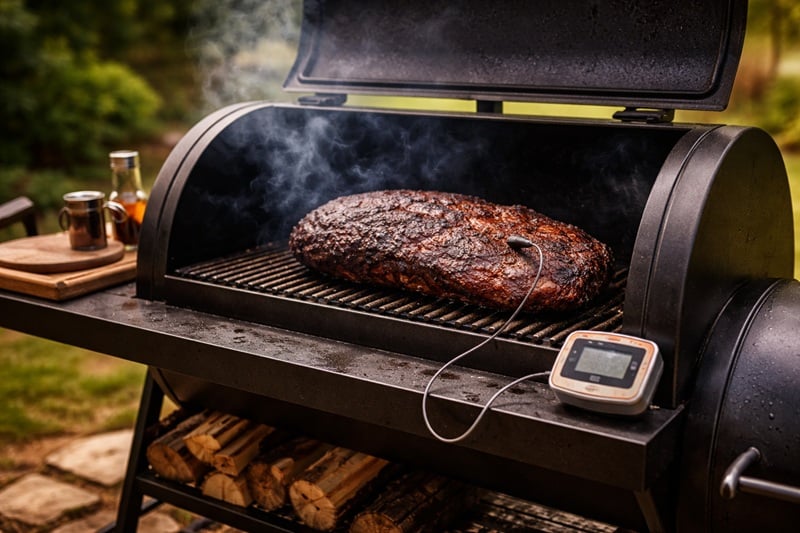
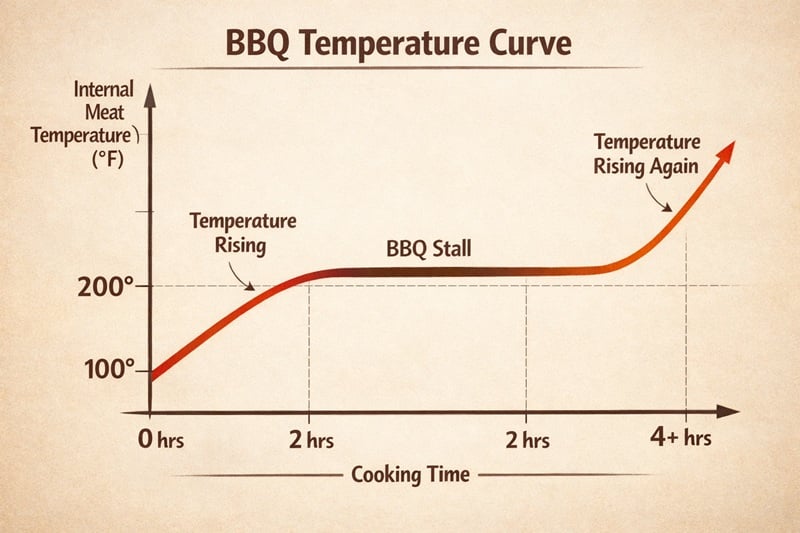
The BBQ stall is a phenomenon where the internal temperature of large cuts of meat like brisket or pork shoulder stops rising, often plateauing between 150–170°F for several hours. This happens because of evaporative cooling, where moisture escaping from the meat cools the surface and temporarily balances the heat coming from the smoker.
What Is the BBQ Stall?
During this stage of a cook, the meat may appear stuck at the same temperature even though the smoker is running normally. Once the surface moisture begins to evaporate away, the cooling effect slows down, and the internal temperature starts rising again.
This process is one of the reasons low-and-slow cooking works so well. I explain the full process in my guide on the science of smoke and low-and-slow BBQ.
If you’ve ever smoked a brisket or pork shoulder, you may have noticed something strange during the cook.
The temperature rises steadily at first. Everything seems to be going smoothly. Then suddenly the thermometer stops moving.
If your meat temperature seems stuck, it also helps to understand where to measure the smoker temperature inside your grill.
It might sit at 160°F for hours.
Your smoker is still running. The fire is steady. But the meat temperature refuses to climb.
That moment is called the BBQ stall, and it surprises almost every beginner the first time it happens.
Eddie’s Tip! The good news is that nothing is wrong with your cook. The stall is a completely normal part of low-and-slow and barbecue basics.
Once you understand why it happens, it becomes much easier to manage.
Instead of steadily climbing, the temperature plateaus and may stay almost unchanged for several hours.
This happens most often when cooking large cuts such as:
- brisket
- pork shoulder (pork butt)
- beef ribs
This temperature plateau is completely normal and is part of the science behind low-and-slow barbecue.
If you’re new to low-and-slow cooking, my guide to smoking meat basics explains the core techniques every backyard pitmaster should understand.
When Does the BBQ Stall Happen?
The stall usually appears when the internal temperature reaches around 150–170°F.
This temperature range is common during long cooks because large BBQ cuts behave differently than smaller meats. I explain this further in my guide on BBQ meat internal temperatures.
At this stage of the cook, several changes are happening inside the meat:
- Muscle fibers have already tightened
- Fat is starting to render
- Moisture begins escaping from the meat
This stage is also when the surface of the meat begins releasing a lot of moisture.
Because of that, the stall tends to appear during long smoking sessions and with large, thick cuts of meat.
Small cuts like steaks or chicken breasts rarely experience a noticeable stall because they cook too quickly.
BBQ Stall Quick Reference
The BBQ stall usually appears during a specific temperature range. This quick guide shows when the stall typically happens and how long it can last.
| BBQ Cut | Typical Stall Temperature | Average Stall Time |
|---|---|---|
| Brisket | 150–170°F | 2–5 hours |
| Pork Shoulder (Pork Butt) | 150–170°F | 2–4 hours |
| Beef Ribs | 155–170°F | 1–3 hours |
The exact temperature and duration of the stall can vary depending on the size of the meat, smoker temperature, humidity, and airflow.
What Causes the BBQ Stall?
The main cause of the BBQ stall is something called evaporative cooling.
As meat cooks, moisture inside the muscle fibers slowly moves toward the surface. Once it reaches the outside of the meat, that moisture begins to evaporate.
Eddie’s Tip! Evaporation cools the surface of the meat, just like sweat cools your skin on a hot day.
While your smoker is trying to heat the meat, evaporation is simultaneously cooling it down.
For a period of time, the heat from the smoker and the cooling effect from evaporation balance each other out. When that happens, the internal temperature stops rising.
That balance is what creates the stall.
Eventually, the moisture on the surface begins to dry up, the cooling effect slows down, and the internal meat temperature starts climbing again.
Why the Stall Happens Mostly With Large BBQ Cuts
Large BBQ cuts stall more than smaller ones for a few reasons.
- First, large cuts contain more moisture. That means there is more liquid that can evaporate from the surface.
- Second, thick cuts of meat cook slowly. This gives evaporation plenty of time to cool the surface.
Finally, cuts like brisket and pork shoulder contain a lot of collagen and connective tissue. These tissues need long cooking times to break down into gelatin, which keeps the meat tender.
Because these cuts cook slowly and contain more moisture, they create the perfect conditions for the stall.
How to Tell When Your Meat Has Hit the BBQ Stall
Beginners sometimes think something is wrong when their cook stalls. In reality, the signs are very predictable.
- One clear sign is that the internal temperature stops rising.
Your thermometer might sit at 155°F or 165°F for a long time without moving.
- Another clue is that the meat may look slightly wet on the surface. Moisture is evaporating from the outside, which is what creates the cooling effect.
- You may also notice that your smoker temperature is stable while the meat temperature refuses to increase.
Eddie’s Tip! That combination of 3 things usually means the stall has started.
It’s also common for the stall to last longer than people expect. Sometimes the temperature barely moves for two to four hours.
How Long Can the BBQ Stall Last
The length of the stall depends on several factors.
Large briskets and pork shoulders often stall for one to three hours, but longer stalls are not unusual.
Several things influence how long it lasts:
- the size of the meat
- humidity inside the smoker
- airflow through the cooker
- cooking temperature
Higher cooking temperatures often shorten the stall, while cooler smoking temperatures can extend it.
The most important thing to remember is that the stall is temporary. Eventually the meat temperature will begin rising again.
Should You Worry About the Stall?
The stall might look like a problem, but it is actually a normal part of the barbecue process.
In fact, experienced pitmasters expect it.
The stall gives the meat extra time to cook slowly, which helps break down connective tissue and develop good bark on the outside of the meat.
Eddie’s Tip! The worst thing you can do during the stall is panic and start constantly adjusting your smoker.
Most of the time, the best approach is simply to be patient and let the cook continue.
How I Push Through the BBQ Stall When Smoking Meat
While many cooks simply wait out the stall, there are a few ways to move through it faster.
- One method is to increase the cooking temperature slightly.
Raising the smoker temperature gives the meat more heat energy, which can overpower the cooling effect of evaporation.
- Another common technique is wrapping the meat.
Wrapping helps reduce the amount of evaporation happening on the surface of the meat, which allows the internal temperature to begin rising again.
The Texas Crutch Explained
One of the most common stall-management techniques is called the Texas Crutch.
This method involves wrapping the meat during the stall to reduce evaporation.
Two common wrapping materials are used:
- aluminum foil
- butcher paper
Foil seals the meat tightly and traps moisture, which pushes the temperature upward more quickly. The downside is that it can soften the bark on the outside of the meat.
Butcher paper allows a little airflow while still reducing evaporation. This helps preserve bark texture while still helping the meat push through the stall.
Many pitmasters wrap brisket or pork butt once the internal temperature reaches around 160–170°F.
If you want a deeper look at this technique, I explain it further in my guide on when to wrap pork butt.
Does the BBQ Stall Affect Flavor or Tenderness?
The stall may slow down your cook, but it also helps develop some of the best qualities of barbecue.
During this stage, the meat spends more time in the smoker, which helps build bark on the outside.
At the same time, the long cooking process allows connective tissue to slowly break down into gelatin.
This process is what makes brisket slices tender and pulled pork easy to shred.
Without enough cooking time, these cuts would stay tough and chewy.
The first time your brisket sits at 160°F for two hours, it can make you nervous. I remember staring at the thermometer, thinking something was broken.
Once the stall passes, the temperature will start climbing again.
Eddie’s Tip! Barbecue rewards patience more than anything else.
The BBQ Stall – My Experience
The BBQ stall happens when evaporating moisture cools the surface of the meat and temporarily balances the heat from the smoker.
This usually occurs between 150–170°F during long cooks of large cuts like brisket or pork shoulder.
Although it may look like the cook has stopped, the stall is simply part of the natural barbecue process.
Once evaporation slows down, the internal temperature begins rising again, and the meat continues cooking toward tenderness.
Eddie’s Tip! If my smoker temperature is steady, I leave the meat alone and let the stall run its course.
Understanding the stall makes long smoking sessions much less stressful and helps you cook better barbecue with confidence.
So, don’t worry when it happens. Just relax and let the smoker do its work.
Eddie van Aken – The Grilling Dutchman
Eddie van Aken is the founder of The Grilling Dutchman, where he teaches practical, no-nonsense BBQ and outdoor cooking. With years of hands-on experience working with grills, smokers, and live fire, he focuses on techniques that actually work in real backyards.
When he’s not cooking, Eddie tests and reviews outdoor gear and equipment for PracticalBackyard.com. Learn more about Eddie van Aken.