
When people start learning barbecue, one of the first things they ask is:
“What temperature is this meat supposed to reach?”
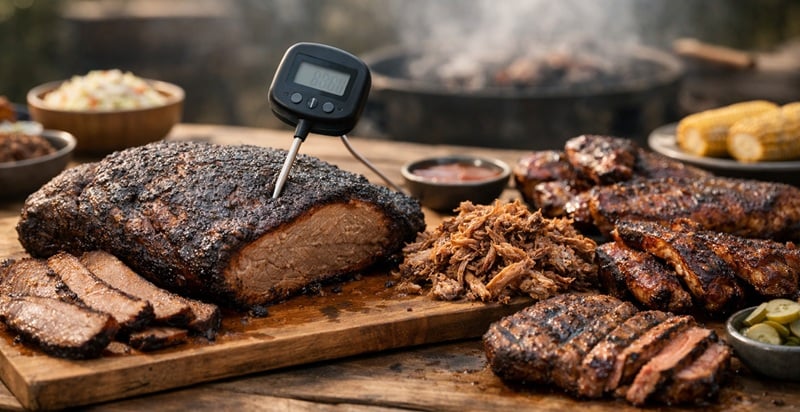
In BBQ meat internal temperatures of the meat is more like a road map than a finish line. It tells you roughly where the meat is in the cooking process.
You will hear numbers like 165°F for chicken, 203°F for brisket, and 195°F for pulled pork. Those numbers are helpful, but they don’t tell the whole story.
Eddie’s Tip! Great BBQ happens because of what heat is doing inside the meat itself.
Once you understand that, those numbers start making a lot more sense.
New to low-and-slow cooking? My smoking meat basics guide will walk you through the core techniques every backyard pitmaster should know.
Why Internal Temperature Matters in BBQ
As meat cooks, heat slowly changes its structure.
Muscle fibers tighten. Fat starts to render. Connective tissue breaks down. Moisture moves through the meat.
These changes happen at different temperature ranges.
For example:
- Around 120–140°F, muscle fibers begin tightening.
- Around 150–170°F, the meat starts losing more moisture.
- Around 160–180°F, connective tissue like collagen begins breaking down into gelatin.
That gelatin is what makes slow-smoked meats like brisket and pork shoulder tender and juicy.
Eddie’s Tip! If you stop cooking those cuts too early, the meat may technically be safe to eat, but it will still be tough and chewy.
This is one of the reasons low-and-slow cooking works so well. I break down the process in more detail in my guide on the science of smoke and low-and-slow BBQ.
That’s why traditional BBQ cooks often take meat far beyond basic food safety temperatures.
Safe Temperatures vs BBQ Cooking Temperatures
There are really two different temperature goals when cooking meat.
- First is food safety.
- Second is barbecue tenderness.
Food safety temperatures (1) are designed to destroy harmful bacteria.
Typical safe internal temperatures are:
- Chicken: 165°F
- Ground beef: 160°F
- Pork: 145°F
- Beef steaks and roasts: 145°F (minimum)
But barbecue cuts like brisket and pork shoulder contain a lot of collagen and connective tissue. Those tissues need time and heat to soften.
That process doesn’t fully happen until the meat climbs into the 190–205°F range.
So while the meat might be safe earlier, it won’t be tender yet.
Knowing the internal temperature of the meat is important, but it also helps to understand where to measure smoker temperature inside your grill.
BBQ Meat Internal Temperature Guide
These temperature ranges give you a good idea of where most BBQ cuts finish.
| Meat Cut | Safe Minimum Temp | Typical BBQ Finished Temp | Notes |
|---|---|---|---|
| Brisket | 145°F | 200–205°F | Tender when a probe slides in easily |
| Pork Shoulder (Pulled Pork) | 145°F | 195–205°F | Ready when meat pulls apart easily |
| Beef Ribs | 145°F | 200–205°F | Probe should slide in with little resistance |
| Pork Ribs | 145°F | 195–203°F | Meat should be tender but not falling apart |
| Chicken (Breast) | 165°F | 165–170°F | Avoid overcooking to prevent dryness |
| Chicken (Thighs/Drumsticks) | 165°F | 175–185°F | Dark meat benefits from slightly higher temps |
| Steak | 145°F | 120–145°F depending on doneness | Rare to medium doneness range |
Eddie’s Tip! These temperatures are good guidelines, but tenderness and texture should always be the final indicator that BBQ meat is done.
Brisket Internal Temperature
The typical brisket internal temperature where tenderness happens is around 200–205°F.
Brisket is packed with connective tissue. During a long cook, collagen slowly melts into gelatin.
That transformation is what creates tender slices and juicy bark.
Most pitmasters begin checking tenderness around 195°F and finish when a probe slides into the meat easily.
Pork Shoulder (Pulled Pork) Internal Temperature
The ideal pork shoulder internal temperature for pulled pork is usually 195–205°F, which allows the meat to become soft enough to pull apart easily.
Pork shoulder behaves very similar to brisket.
Once the meat reaches this range, the connective tissue has broken down enough that the meat can be pulled apart easily.
If it is still resisting when you try to shred it, it probably needs more time. If you like to read about my personal experience, you can read my when to wrap pork butt article.
Beef Rib Internal Temperature
The finished beef rib internal temperature usually falls between 200–205°F, when the meat becomes tender and a probe slides in smoothly.
Large beef ribs need time for the collagen between the muscle fibers to soften.
When they are ready, a thermometer probe or skewer will slide in with very little resistance.
Pork Ribs Internal Temperature
The typical pork rib internal temperature when ribs are fully cooked is around 195–203°F, although tenderness matters more than the exact number.
Chicken Internal Temperature for BBQ
The safe chicken internal temperature is 165°F, though many BBQ cooks take thighs and drumsticks closer to 175–185°F for better texture.
Chicken doesn’t contain nearly as much connective tissue as brisket or pork shoulder, so it doesn’t need the same long cooking process.
For dark meat like thighs or drumsticks, many cooks prefer cooking them to 175–185°F. That higher temperature helps break down some connective tissue and produces better texture.
Steak Internal Temperature Guide
The ideal steak internal temperature depends on doneness, usually ranging from 120°F for rare to 145°F for medium.
- Rare: 120–125°F
- Medium-rare: 130–135°F
- Medium: 140–145°F
- Medium-well: 150°F+
Because steaks are relatively tender cuts, they don’t require long cooking times.
Why Meat Keeps Cooking After You Remove It
One thing beginners often overlook is carryover cooking.
When you remove meat from the grill or smoker, it doesn’t instantly stop cooking. Heat from the outer layers continues moving toward the center of the meat.
This can raise the internal temperature anywhere from 5 to 20 degrees, depending on the size of the cut.
That’s why experienced cooks often pull meat slightly before the final target temperature and let it rest.
Large cuts like brisket and pork shoulder can continue cooking for quite a while after they leave the smoker.
Why Temperature Alone Doesn’t Guarantee Tender BBQ
This is where barbecue becomes more of an art than a strict science.
Two briskets can both reach 203°F, but one might be perfectly tender while the other is still a little tough.
Why?
Because temperature is only one piece of the puzzle. Tenderness is the
Tender BBQ also depends on:
- How long the meat has been cooking
- How much collagen has broken down
- How much fat has rendered
- How evenly the heat moved through the cut
That’s why experienced pitmasters rely on something called the probe test.
When a thermometer probe slides into the meat easily (almost like pushing through soft butter) the meat is ready.
The number on the thermometer gets you close, but tenderness makes the final decision.
Eddie’s Tip!
Eddie’s Tip! When I cook brisket or pork shoulder, I don’t chase one exact temperature. I start checking the meat once it gets close to 195°F.
If the probe still feels tight going in, the cook isn’t finished yet. When it slides in smooth with almost no resistance, that is when I know the meat is ready to rest.
The Thermometer Is Still Your Best BBQ Tool
Even though tenderness matters most, a good thermometer is still one of the most valuable tools you can own.
A reliable thermometer helps you:
- Avoid undercooking meat
- Prevent drying it out
- Monitor long smoking sessions
- Learn how different cuts behave during a cook
Once you start paying attention to internal temperatures during your cooks, you’ll quickly get a feel for when different meats are getting close to done.
A reliable meat thermometer makes tracking internal temperatures much easier. If you are looking for options, take a look at my guide to the best BBQ thermometers.
BBQ Meat Internal Temperatures — My Experience
Internal temperatures are a guide, not a strict rule.
Safe temperatures make meat edible, but great barbecue requires more time so fat renders and connective tissue break down.
That’s why brisket and pork shoulder often finish around 200°F or higher, while lean meats like chicken and steak finish much sooner.
Use your thermometer to track the cook, but always let tenderness make the final call.
Eddie van Aken- The Grilling Dutchman
Eddie van Aken is the founder of The Grilling Dutchman, where he teaches practical, no-nonsense BBQ and outdoor cooking. With years of hands-on experience working with grills, smokers, and live fire, he focuses on techniques that actually work in real backyards.
When he’s not cooking, Eddie tests and reviews outdoor gear and equipment for PracticalBackyard.com. Learn more about Eddie van Aken.